
Guides
What Is Leather Made Of
Leather is one of humanity’s oldest, most versatile, and enduring materials. From prehistoric protective wraps to high-end modern varsity jacket sleeves and premium biker outerwear, it has remained a symbol of durability and luxury. However, to truly understand leather, one must look beyond the surface of a finished jacket or luxury bag.
At its core, leather is a biological matrix transformed by science. It is a natural, durable material created through the chemical alteration of animal hides and skins a process known as tanning. While cattle hide is the most common raw material, skins from sheep, goats, pigs, and exotic animals are also utilized to produce distinct textures and performance characteristics.
Understanding What Is Leather Made Of? Every Type and Grade Explained, how it is processed, and the structural differences between various grades is essential for both consumers and creators. This comprehensive guide will dissect the biological composition of leather, explore the intricate tanning processes, and analyze every major grade and type of leather available in the market today.
The Anatomy and Biological Composition of Hide
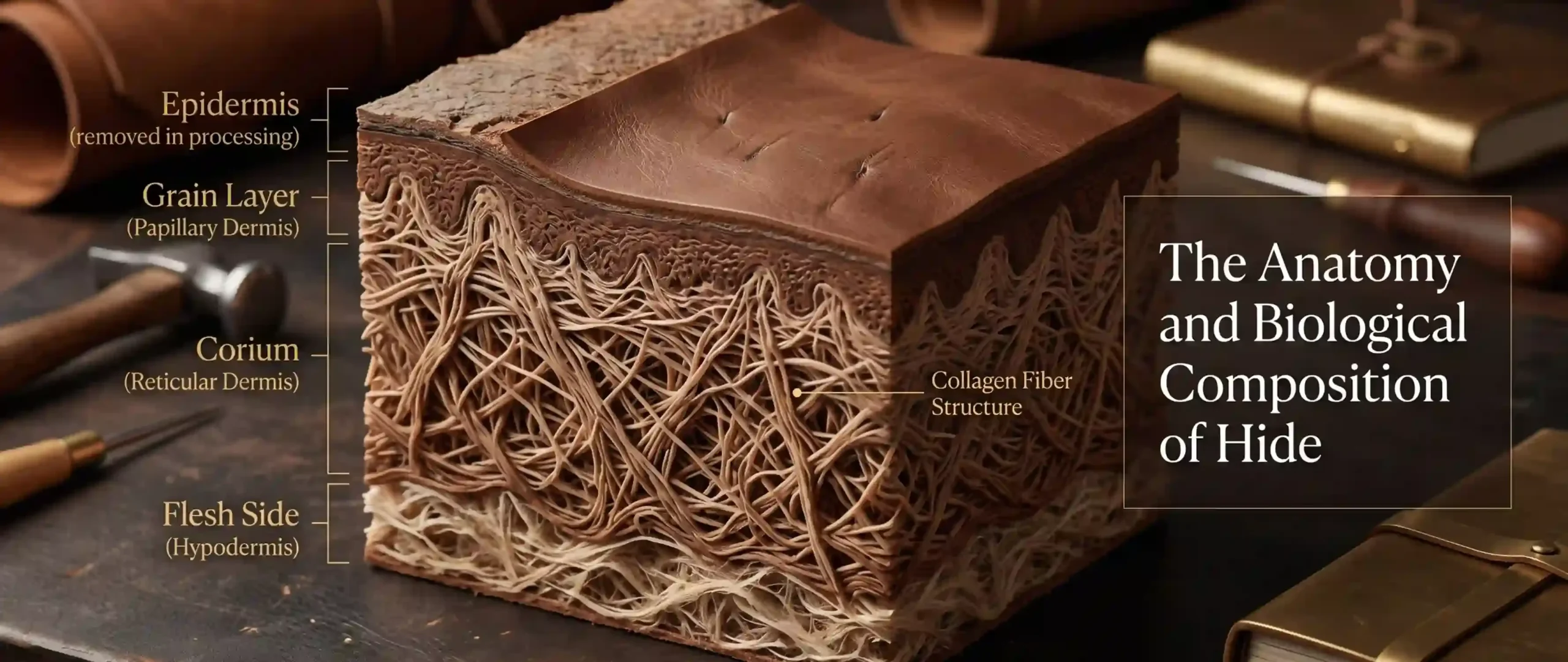
To understand why leather behaves the way it does its tensile strength, flexibility, and breathability the biological structure of animal skin must first be examined. Raw skin is not a uniform block of material; it is a highly specialized organ composed of distinct layers.
The Epidermis
The epidermis is the outermost layer of the skin. It contains hair follicles and cellular debris. During the early stages of leather preparation, this layer is completely removed, as it does not possess the structural integrity required for leather production.
The Corium (Dermal Layer)
The corium is the layer utilized to manufacture leather. It is predominantly composed of a dense, interwoven network of collagen fibers. Collagen is a structural protein shaped like a triple helix, providing immense tensile strength.
- The Grain (Papillary Layer): The upper region of the corium, where the fibers are incredibly fine, tightly woven, and dense. This layer provides water resistance and houses the unique natural markings, pores, and textures of the animal.
- The Flesh (Reticular Layer): The lower region of the corium, where the collagen fibers are much coarser, looser, and arranged in a more open structure. This is the area that gives suede its characteristic fuzzy nap.
The Tanning Process: How Raw Hide Becomes Leather
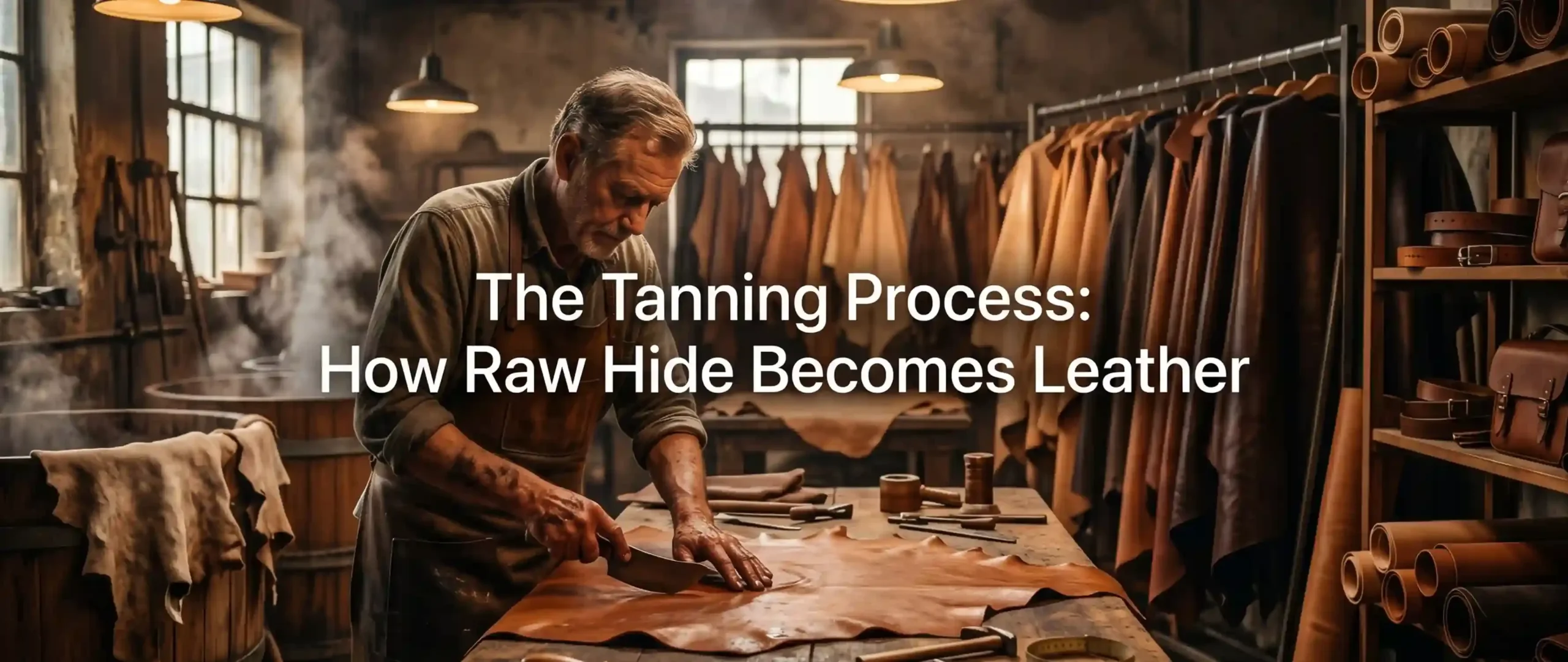
Raw animal hides are highly susceptible to putrefaction (rotting) when wet and become stiff and brittle when dried. Tanning is the chemical process that permanently alters the collagen structure, stabilizing the hide against bacterial decay, increasing its thermal stability, and preserving its flexibility.
Before the actual tanning takes place, hides undergo extensive pre-tanning operations, including curing (salting), soaking, liming (to remove hair), fleshing, and pickling (lowering the pH level). Once prepared, the hides are subjected to one of two primary tanning methodologies:
1. Chrome Tanning (Mineral Tanning)
Introduced in the late 19th century, chrome tanning is used to produce approximately 80% to 90% of the world’s leather today. It utilizes chromium salts (specifically chromium sulfate) to stabilize the collagen matrix.
- The Process: Hides are tumbled in large rotating drums filled with an acidic chromium solution. The chromium ions penetrate the hide and bind with the carboxyl groups of the collagen.
- The Result: Chrome-tanned leather is produced quickly (often within 24 hours). It is highly flexible, stretch-resistant, water-resistant, and easily dyed into a vast spectrum of vibrant colors. It is the preferred choice for supple leather jackets.
2. Vegetable Tanning (Natural Tanning)
Vegetable tanning is an ancient craft dating back thousands of years. It relies on natural tannins extracted from organic plant matter, such as chestnut, oak, quebracho wood, and tara pods.
- The Process: Hides are suspended in a series of vats containing progressively stronger concentrations of plant-derived tanning liquors. This process is slow, often requiring several weeks or months to complete.
- The Result: Vegetable-tanned leather is thick, firm, and structurally rigid. It retains a distinct earthy aroma and develops a beautiful, darkened patina over time as it interacts with sunlight and body oils. It is commonly used for heavy-duty belts, saddles, shoe soles, and high-end artisanal goods.
Other Tanning Methods
Brain Tanning & Aldehyde Tanning: Traditional or specialized synthetic methods used to create exceptionally soft leathers, such as chamois, or chrome-free leathers often used in automotive interiors.
Every Grade of Real Leather Explained
When a thick animal hide is harvested, it is often too thick to be used for consumer goods. Consequently, the hide is mechanically split horizontally into multiple layers. The specific section of the hide used determines the grade of the leather, directly influencing its price, durability, and appearance.
| Leather Grade | Hide Layer Used | Natural Grain Retained? | Durability Level | Common Uses |
| Full-Grain | Top layer (intact) | Yes (100%) | Maximum | Premium boots, luxury jackets, high-end bags |
| Top-Grain | Top layer (sanded) | No (Altered) | High | Designer handbags, wallets, varsity jacket sleeves |
| Genuine Leather | Lower split layers | No | Moderate to Low | Budget belts, fast-fashion shoes, lining |
| Split Leather | Bottom flesh layer | No | Moderate | Suede jackets, work gloves, lining |
| Bonded Leather | Leftover scraps | No | Very Low | Cheap furniture, low-end accessories |
Full-Grain Leather: The Pinnacle of Quality
Full-grain leather is defined as hide that has not been sanded, buffed, or corrected to remove natural imperfections or marks. It retains the entire grain layer, including the densest collagen fiber structures.
Characteristics: Because the grain is left completely intact, the leather features the natural imperfections of the animal, such as insect bites, stretch marks, or minor scars. It is highly breathable and exceptionally durable.
The Patina Factor: Full-grain leather is unique because it does not wear out; instead, it matures. Over years of use, it develops a rich, lustrous patina that enhances its aesthetic value. It represents the highest tier of luxury leather goods.
Top-Grain Leather: The Premium Standard
Top-grain leather is harvested from the same upper layer of the hide as full-grain, but it undergoes a mechanical alteration. The topmost surface is lightly sanded or buffed to erase natural blemishes and scars.
- The Process: After sanding away imperfections, a synthetic topcoat or sealant is applied to the surface. Often, an artificial grain pattern is mechanically stamped onto the leather to give it a uniform look.
- Characteristics: Top-grain leather is slightly thinner, more flexible, and more stain-resistant than full-grain leather due to its protective finish. However, because the strongest outermost fibers are removed, it loses some tensile strength and will not develop a natural patina over time. It is widely used in high-end consumer fashion and premium jacket manufacturing.
Genuine Leather: Decoding the Marketing Term
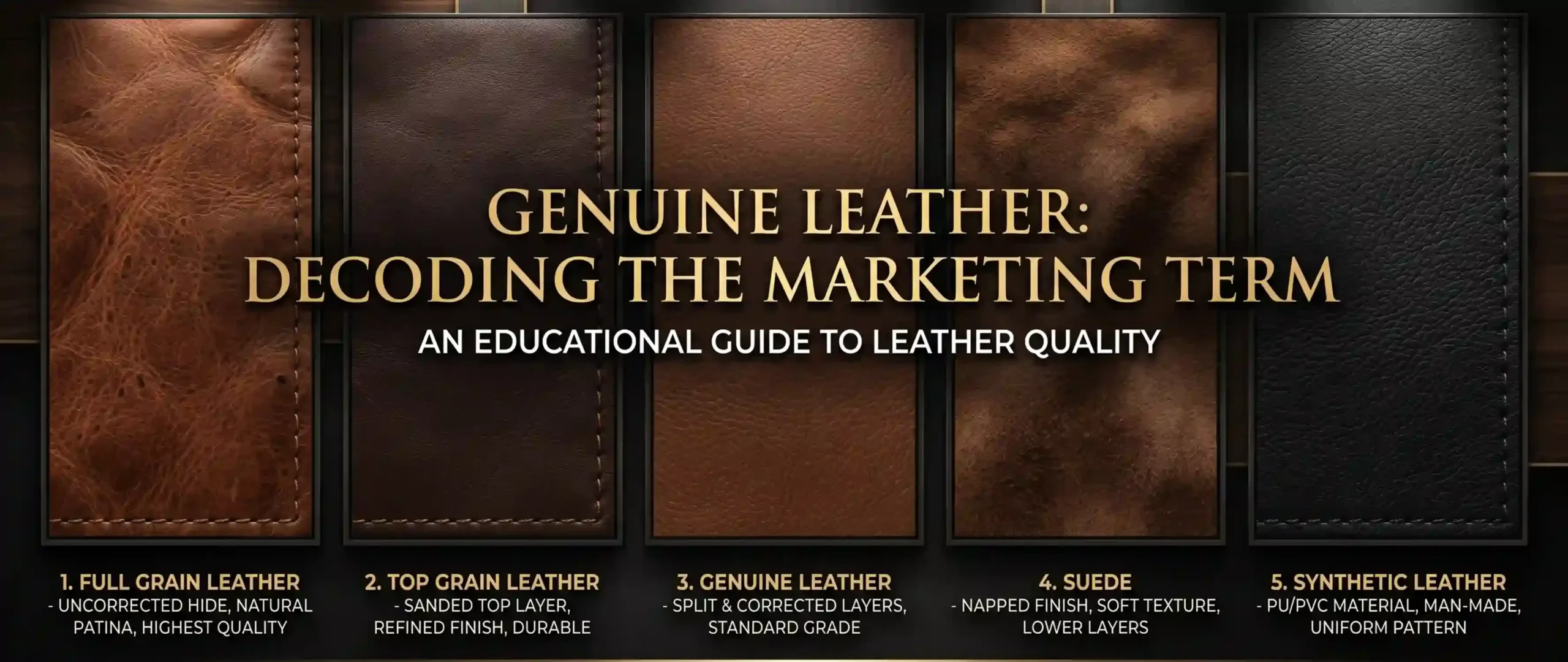
The term “Genuine Leather” is frequently misunderstood by consumers. While it confirms that the product is made from real animal hide, it does not mean it is high-quality. In the industry hierarchy, Genuine Leather represents a lower grade of material.
- The Structure: When the top layers (Full-Grain and Top-Grain) are split off, the remaining lower portions of the hide are processed to create genuine leather. These layers lack the dense, protective grain structure.
- The Process: To make these fibrous layers visually appealing, they are heavily treated with synthetic binders, oils, and pigments. An artificial grain texture is then embossed onto the surface.
- Characteristics: Genuine leather looks uniform but lacks long-term durability. It is prone to cracking, peeling, and stretching over short periods of active use. It is commonly found in mass-market retail items, budget wallets, and fast-fashion accessories.
Split Leather and Suede
Split leather is derived from the reticular layer (the flesh side) of the hide after the upper grain layers have been removed.
Suede Production: If the split leather is finished with a brushed, velvety texture on both sides, it is designated as Suede. Suede is celebrated for its soft texture, lightweight feel, and excellent draping qualities, making it ideal for luxury casual jackets. However, because it lacks the protective grain layer, it is highly porous and susceptible to water damage and staining.
Bonded Leather: The Reconstituted Option
Bonded leather is the lowest grade of real leather, occupying a space between genuine hide and synthetic alternatives. It is not made from a solid piece of skin.
The Production Process: Leftover leather scraps, shavings, and dust from tanneries are collected and ground into a fine pulp. This pulp is mixed with synthetic polyurethane or latex binders and extruded onto a fiber mesh backing sheet.
Characteristics: Bonded leather typically contains only 10% to 20% actual leather fiber. It behaves much like vinyl or plastic, emitting a distinct chemical odor, and is highly prone to flaking and peeling within a few months of use. It is predominantly used in low-cost furniture and budget fashion accessories.
Exploring Specialized Leather Types and Varieties
Beyond the standard structural grades, leather is categorized by the specific animal source, processing techniques, and finish applications. Each type offers distinct benefits for specific apparel and accessory applications.
Lambskin and Sheepskin
Lambskin is harvested from young sheep, resulting in an incredibly fine, soft, and lightweight material. The collagen fibers are less dense than those found in mature cattle, providing a supple, buttery hand-feel. It is prized for luxury fashion outerwear where comfort and drape are prioritized over rugged durability.
Cowhide
Cowhide is the industry benchmark for durability and toughness. It is heavy, dense, and naturally resistant to abrasions and punctures. For this reason, full-grain or top-grain cowhide is the standard material used in protective motorcycle gear and heavy-duty winter jackets.
Goatskin
Goatskin features a distinct, tight pebbled grain pattern. It contains a high level of natural lanolin, which makes the leather exceptionally soft, pliable, and naturally water-resistant. Goatskin is stronger and more scratch-resistant than sheepskin, making it an excellent mid-weight option for durable casual wear.
Nubuck Leather
Nubuck is created from full-grain cattle hide that has been gently sanded on the outer grain surface. This creates a velvety nap that is much finer and tighter than traditional suede. Because it retains the underlying grain structure, nubuck is significantly stronger and more durable than suede, though it remains sensitive to moisture.
Nappa Leather
Nappa leather is not an anatomical grade, but rather a quality designation. It refers to exceptionally soft, smooth, full-grain leather derived from sheep, lamb, or calves. It undergoes a specialized chrome tanning process that preserves its natural grain while maximizing its pliability.
Patent Leather
Patent leather is characterized by its high-gloss, reflective, mirror-like surface finish. This effect is achieved by applying a thick, liquid coating of polyurethane, acrylic, or vinyl lacquer to a top-grain or split leather base. It is highly water-resistant but lacks breathability and is prone to creasing.
Saffiano Leather
Originating in luxury Italian fashion houses, Saffiano leather is famous for its cross-hatch diagonal pattern. This texture is pressed into the wax coating of a premium top-grain leather sheet using specialized heated plates. It is exceptionally scratch-resistant, water-repellent, and effortless to maintain.
The Rise of Alternative Leathers: Synthetic, Vegan, and PU
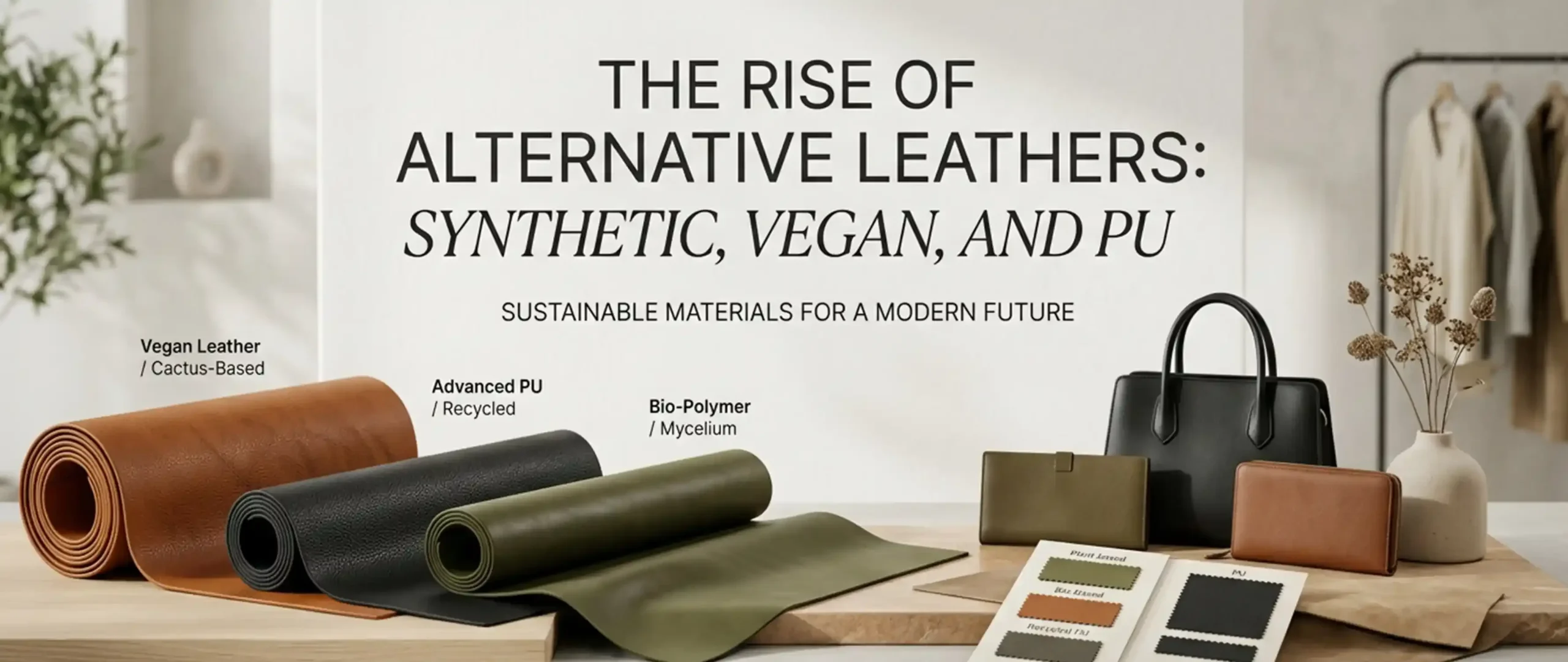
As consumer demands shift toward sustainability, cost-efficiency, and animal welfare, alternative materials have experienced significant innovation. These materials replicate the look of animal hide without utilizing organic animal skins.
PU Leather (Polyurethane)
PU leather is a completely synthetic material created by coating a base textile layer (such as polyester, cotton, or nylon) with a liquid layer of polyurethane polymer.
Performance: It can be manufactured to mirror various leather grain patterns perfectly. Unlike real leather, PU leather is completely waterproof and does not require conditioning. However, it lacks breathability, fails to develop a patina, and has a shorter lifespan as the synthetic layers eventually crack and separate.
Faux Leather and Synthetic Leather
“Faux leather” is a broad umbrella term encompassing all artificial leather alternatives, including PU and PVC (polyvinyl chloride). PVC leather is less breathable and less environmentally friendly than PU, though it is highly durable and easy to clean. Synthetic leathers are heavily utilized in affordable footwear, fast-fashion jackets, and automotive seating.
Vegan Leather
Vegan leather refers to any leather alternative that is produced entirely without animal products. While many vegan leathers are simply traditional petrochemical-based PU or PVC, modern bio-technological advancements have introduced innovative plant-based options:
- Pineapple Leather (Piñatex): Manufactured from the cellulose fibers extracted from pineapple leaves.
- Mushroom Leather (Mycelium): Grown from the root structures of fungi, offering a biodegradable option that closely mimics the cellular texture of real leather.
- Cactus and Apple Leather: Created by processing agricultural byproducts with synthetic polymers to reduce plastic consumption while maintaining performance.
How to Identify and Differentiate Leather Types
For consumers navigating the marketplace, distinguishing between high-quality leather, low-grade splits, and synthetic alternatives can be challenging. The following investigative methods can be applied to verify the authenticity and grade of a material:
- The Touch and Visual Inspection: Examine the surface under bright lighting. Real full-grain or top-grain leather will display minor irregularities, inconsistent pore layouts, and natural imperfections. Synthetic leather or heavily corrected genuine leather will exhibit an absolute, repetitive pattern uniformity.
- The Tactile Warmth Test: Real leather is a natural thermal conductor. When a hand is pressed against it, the material absorbs body heat and warms up quickly. Synthetic alternatives feel cold to the touch initially and do not adapt to body temperature as efficiently.
- The Scent Test: Real animal leather possesses a distinctive, rich, organic, and woody aroma acquired from the tanning process. Synthetic PU or PVC leather emits a sharp, chemical, plastic, or petroleum-like odor.
- The Moisture Absorbency Test: Apply a single drop of water to an inconspicuous area of the material. Real leather is naturally porous and will slowly absorb the moisture, resulting in a temporary darkening of the surface. Water placed on synthetic leather or heavily sealed patent leather will bead up and roll off completely.
Conclusion and Strategic Internal Links
Understanding what leather is made of reveals that it is not a singular product, but a vast spectrum of materials ranging from prized full-grain cattle hides to engineered bio-textiles. Each grade and type serves a specific purpose, offering distinct balances of longevity, aesthetic appeal, and pricing.
For maximum garment lifespan and the development of a classic aesthetic over time, investing in full-grain or top-grain articles remains the ideal approach. Alternatively, advanced synthetic and plant-based vegan options offer high performance for those prioritizing water resistance or animal-free alternatives.
To establish deep structural clarity and expand knowledge on specific leather variants, processing methodologies, and garment maintenance, our specialized material cluster guides can be explored:
- To understand the mechanics, production, and performance of polyurethane-based synthetic alternatives, read the complete analysis on What Is PU Leather and Its Common Applications.
- Discover the structural differences, cost variations, and durability factors of artificial hides by visiting the comprehensive guide on Faux Leather vs Real Leather: The Ultimate Comparison.
- Learn how natural full-grain hides are transformed into ultra-soft luxury outerwear materials by reading our deep dive into What Is Nappa Leather? Processing, Care, and Characteristics.
- Explore the unique textured aesthetic, water resistance, and craftsmanship behind premium cross-hatch leather variants in the architectural overview of What Is Saffiano Leather? The Luxury Material Explained.
- Understand the composition, eco-friendly manufacturing, and performance benefits of modern plant-based textiles by reviewing the breakdown on What Is Vegan Leather? Everything You Need to Know.
Additionally, structural maintenance strategies can be reviewed to protect investments from environmental damage:
- Safeguard premium materials from moisture by accessing our tutorial on Whether Leather Can Get Wet and Weather Management.
- Maintain the pristine condition of outerwear by implementing our professional steps on How to Properly Clean a Leather Jacket Without Damaging the Material.
To explore the complete range of leather materials, outerwear guides, and expert advice, visit the official America Jackets Leather Types & Materials Hub.


Related Posts
Jacket Materials and Colors Guide: Everything You Need to Know
Continue Reading4th of July Outfits, Jackets and Independence Day Style Guide
Continue ReadingWhat Is Faux Leather? Everything You Need to Know Before Buying
Continue Reading