
Guides
What Is a Wool Coat? The Fabric, History, and Why It Never Goes Out of Style
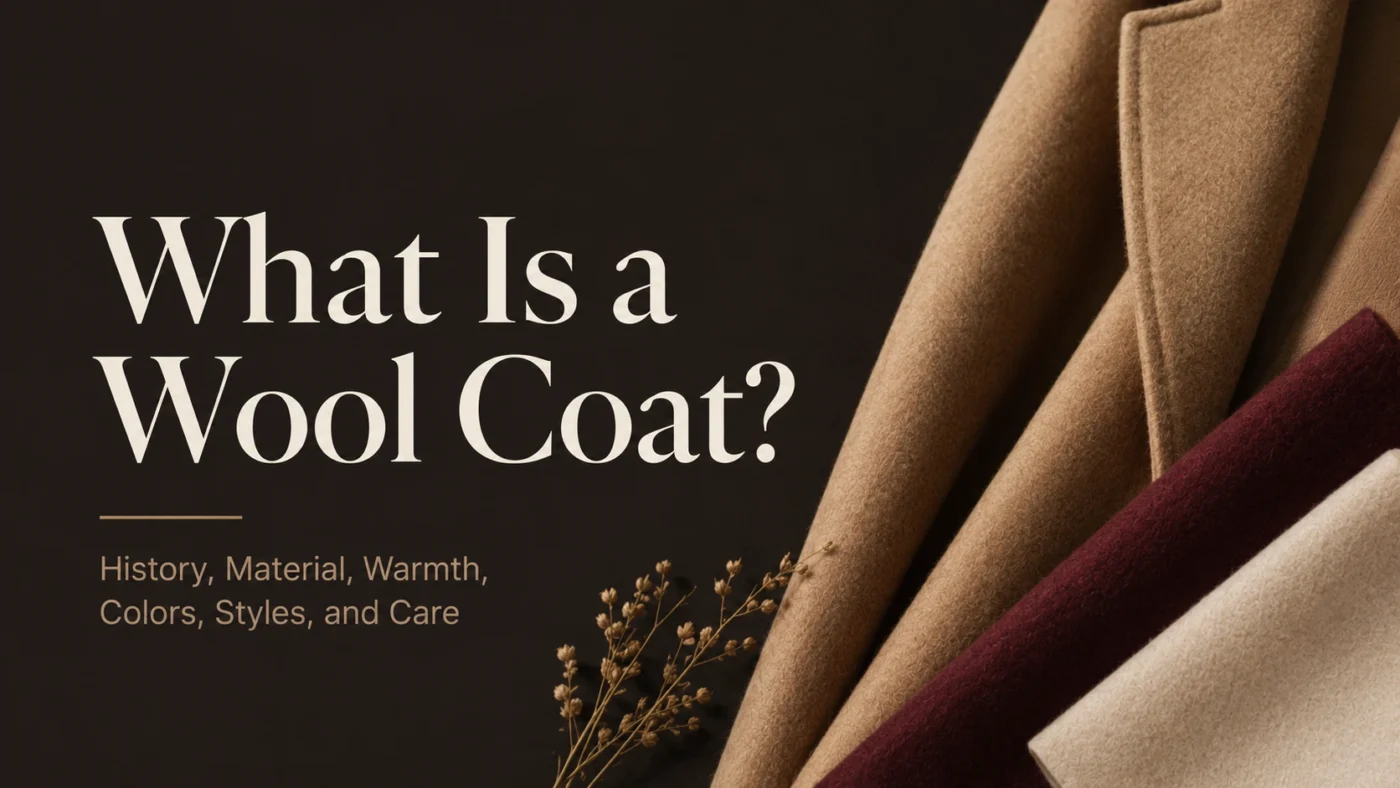
Strip away the styling and the seasonal colors, and a wool coat is just one idea, executed well: a structured outer layer woven mostly or entirely from sheep’s wool, built to insulate on its own, with no padding or separate lining doing the real work. That one fact explains everything else about the category, why it lasts decades instead of seasons, and why nothing synthetic has managed to push it out of a closet. This article covers where the design came from, what the fabric is actually made of, the reasoning behind why people keep choosing it season after season, every major color and cut available today for both women and men, what an A-line coat actually is, and the care routine that keeps one looking right for years.
Where the Design Came From
People have been turning wool into fabric for thousands of years, long before the coat existed as a tailored garment. Sheep were domesticated partly for their fleece, and once that fiber could be spun and woven, it became one of the very first materials humans relied on for warmth. Early versions weren’t cut and fitted the way a modern coat is; they were wrapped, draped, and pinned, closer to a cloak than anything resembling tailoring.
Tailoring itself, and the fitted coat that came with it, took shape centuries later. Wool had already become a major economic force by the medieval period, particularly across England and parts of Europe like Flanders, where it was traded heavily enough to shape entire regional economies. It wasn’t until the 17th and 18th centuries that European tailors began shaping wool into the structured, body-fitting outerwear that looks recognizably like a coat today.
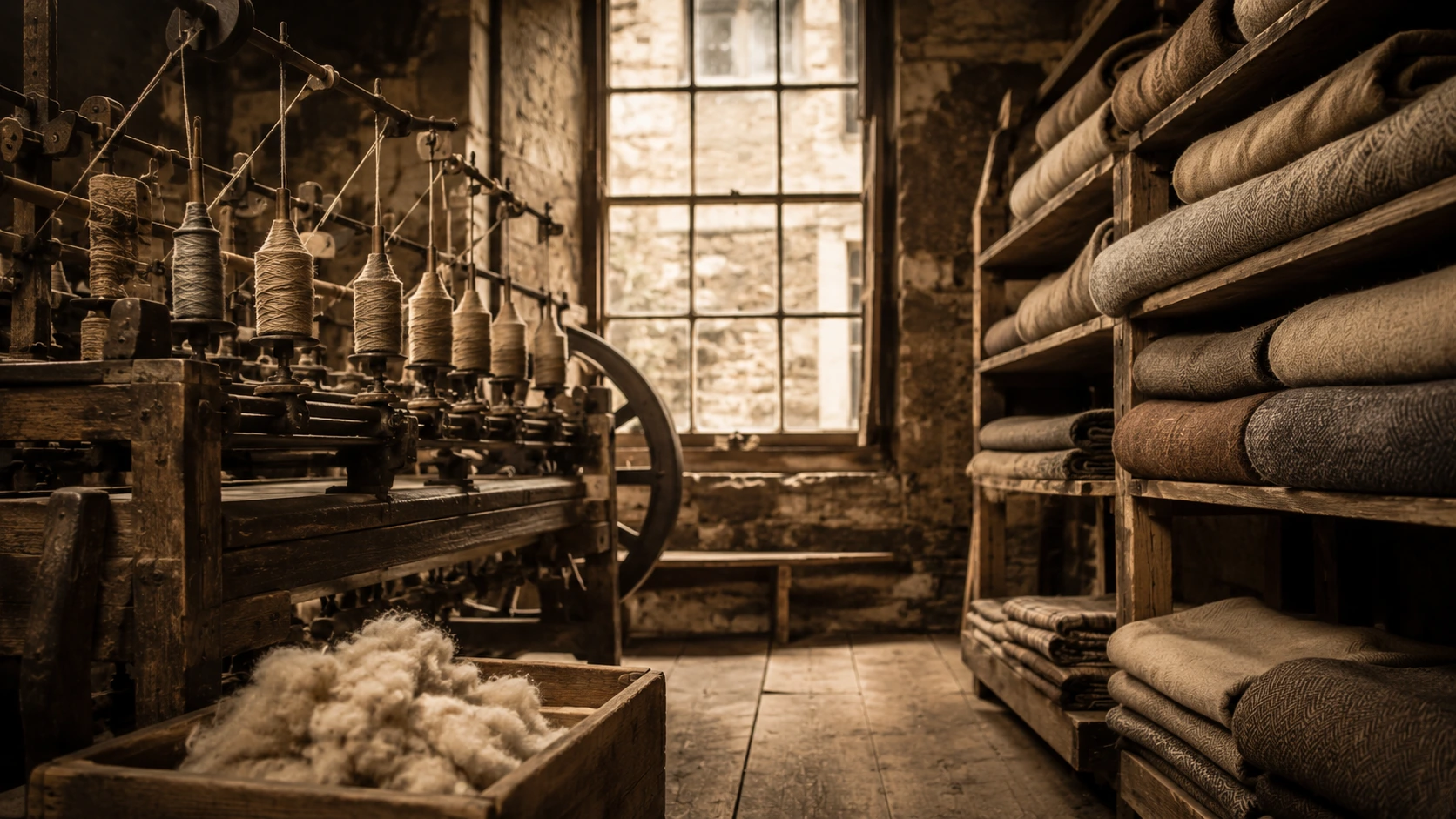
A surprising number of the silhouettes still sold now started out as uniforms rather than fashion. The short, double-breasted pea coat has its roots in European naval dress, chosen for being heavy and wind-resistant enough to survive life at sea. The duffle coat traces back to a thick wool cloth originally milled in Duffel, Belgium, later picked up by the British Royal Navy for its warmth. The trench coat is the one exception worth knowing about: the original, designed for British officers during the First World War, was made from waterproofed cotton, not wool at all. The wool version sold today borrowed the shape and the belt but swapped in a heavier fabric better suited to ordinary winter wear than to a battlefield. Civilian fashion eventually folded all of these into mainstream tailoring, and by the middle of the twentieth century, the wool coat had fully crossed over from utility wear into fashion houses.
What the Fabric Is Actually Made Of
Wool fiber has a natural crimp built into its structure, almost like a microscopic spring, and that crimp is what traps air close to the body. Trapped air is what insulates, which is the same underlying principle behind a down jacket, just achieved with a much sturdier material. That crimp is also why wool resists wrinkling better than cotton or linen and why a well-made coat tends to hold its shape for years rather than going limp.
Not every coat described as “wool” is built the same way. A handful of breeds, merino chief among them, produce a finer, softer fiber than standard sheep’s wool, which is why merino often shows up in lighter, more refined coats. Cashmere comes from a completely different animal, the cashmere goat, and its fiber is finer still, which is why a cashmere-wool blend feels noticeably lighter and softer for roughly the same level of warmth. A coat can also be labeled by how much wool it actually contains: a fully wool garment uses nothing else, while a wool-blend version mixes in something like polyester or nylon to lower the cost and add a bit of stretch, usually trading away some warmth and structure in the process.
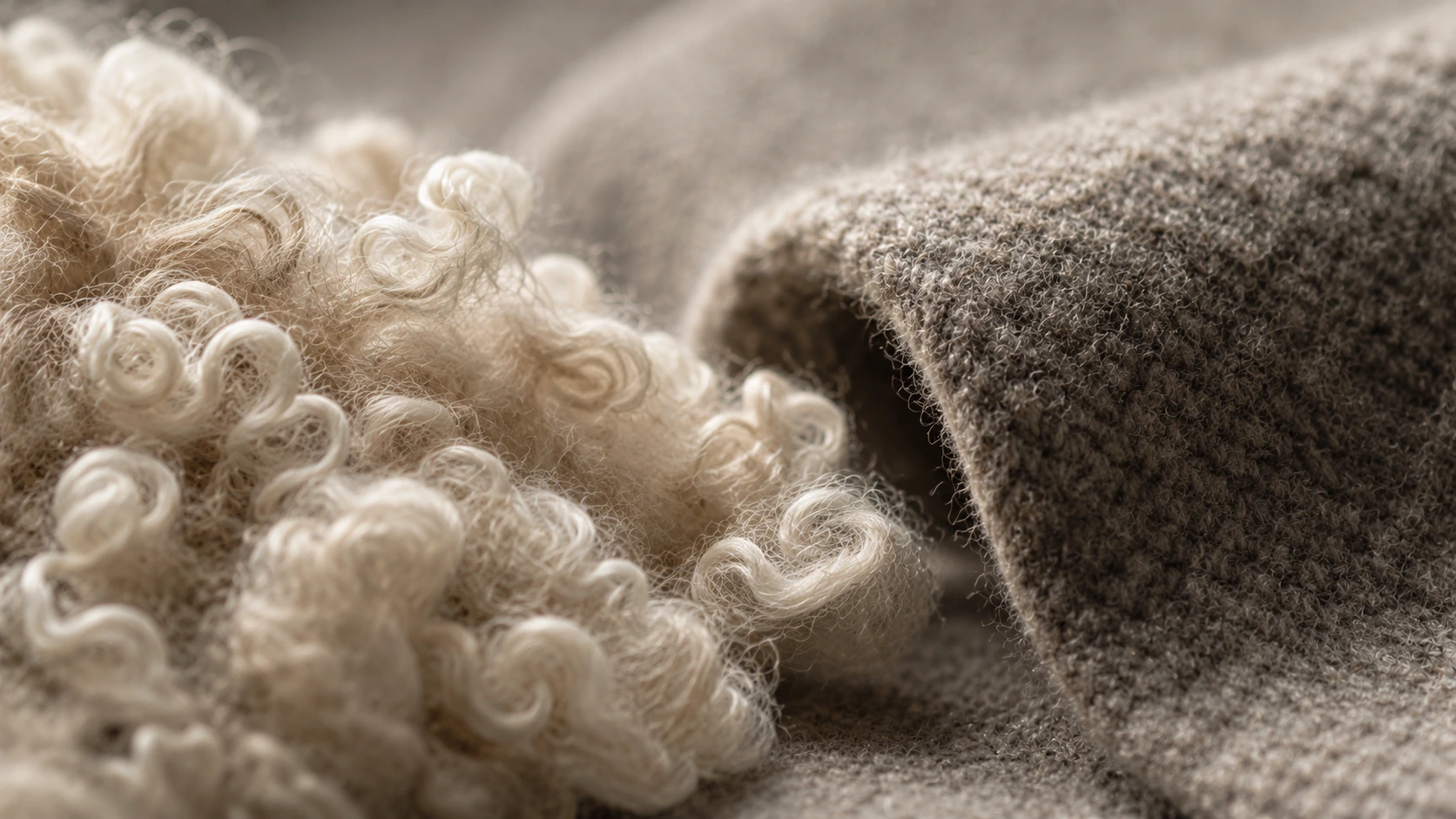
There’s also a detail people rarely think about until they’re caught outside in bad weather: untreated wool carries a film of lanolin, a wax the sheep produces naturally, and that film gives the fiber a built-in head start against moisture before any waterproofing spray ever touches it.
Why It’s Still Worn
Warmth is the obvious draw, but a second advantage gets overlooked just as often: breathability. A heavily padded synthetic coat can trap heat and moisture against the body in a way that leaves the wearer overheated, while wool’s structure lets a bit of that warm air escape, so a long wool coat tends to feel comfortable across a wider range of temperatures rather than just blasting heat regardless of conditions.
Durability plays an equally large role. Cheaper fabrics tend to give out after a season or two of regular use, whereas a wool coat shrugs off that kind of wear and, being a natural fiber, eventually decomposes instead of lingering in a landfill the way synthetic fill does. Versatility matters too: the same coat that pulls a suit together for a meeting will look just as at home over jeans on a Saturday, which is a rare trait for a single piece of outerwear to pull off. Taken together, that’s why a wool coat often gets treated less like a seasonal buy and more like something worth holding onto for years.
Wool Coat Colors: What’s Available
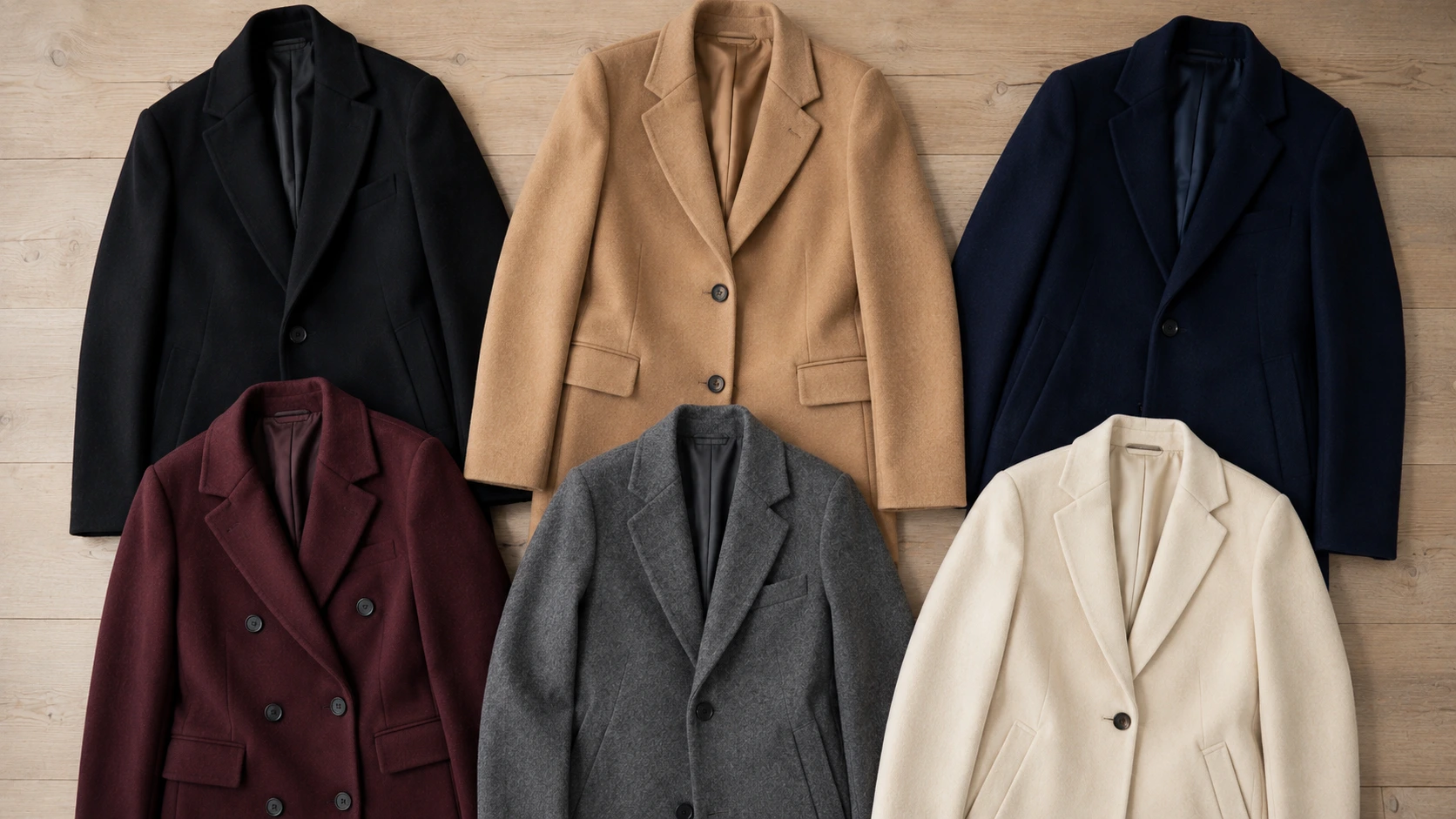
Color choice follows a fairly predictable pattern, even with how many options exist. Black remains the single easiest wool coat to own, since it works with almost anything else already hanging in a closet. Right behind it sit the warm neutrals: camel, brown, tan, and beige all read as classic without the starkness of black, and grey splits the difference between the two. Navy sits in its own lane too, neutral enough to dress up or down depending on where it’s headed.
Past the neutrals, there’s room for more personality. Burgundy, a deep red, or a forest green adds color without abandoning a timeless silhouette, and lighter shades like cream or pale blue offer a softer alternative, though they show dirt fast enough that they suit a careful owner better than a daily commuter coat. A plaid coat stands apart from all of it, built to be the focal point of an outfit rather than something that blends into the rest.
Choosing a Wool Coat: Women’s Styles
Length is usually the first fork in the road. Anything that hits below the knee carries more formality and blocks more wind, which is exactly why it’s the go-to choice for layering over dresses or commuting in genuinely cold weather. Pull the hem up to the hip instead, and the coat gives up part of that coverage in exchange for freedom to move and a cleaner line over a chunky sweater.
From there, the silhouette takes over. The trench keeps its tied waist and clean shoulders no matter the fabric weight, which explains why it still photographs as polished even in a heavier wool than the original design called for. The pea coat takes the opposite approach: short, boxy, and closed with two parallel rows of buttons sturdy enough to be worn open without the coat losing its shape. Anyone after something less tailored usually lands on a wrap style, which closes with a tie instead of buttons, or a cape cut, which drops the sleeves altogether for a more theatrical silhouette.
Fit details end up mattering as much as the cut itself. Cinching a belt at the waist turns an otherwise boxy coat into something with real shape, while going the opposite direction with an oversized fit has become a genuine favorite precisely because it swallows a thick sweater without straining at the seams. A hood quietly fixes the one thing wool struggles with on its own, since rain and wind remain the fabric’s biggest weakness. Extended sizing has improved too, with a plus size wool coat now far more likely to come properly tailored rather than simply scaled up from a smaller pattern, across nearly every cut described here.
Choosing a Wool Coat: Men’s Styles
The overcoat is still the anchor piece for men, mostly because nothing else moves as easily between a suit and a pair of jeans. Cut at or just past the knee, it’s built to be worn over a full outfit rather than alongside one. A topcoat scales that idea down: shorter, lighter, and meant for the in-between weeks of fall and early spring rather than the coldest stretch of winter.
The men’s pea coat keeps the same nautical shape as the women’s version but runs straighter through the torso, while a men’s trench coat swaps that stockier build for a belted waist and sharper shoulder line instead. Anyone who needs something that won’t bunch up behind the wheel or get in the way between meetings usually reaches for a car coat, sometimes labeled a driving coat, which stops at the hip rather than running any longer.
What Is an A-Line Wool Coat?
The name borrows directly from the A-line skirt: narrow through the shoulders, then widening steadily on the way down to the hem. Because the fabric skims the body instead of hugging it, an a line wool coat tends to suit a broader range of frames than one cut in a straight line top to bottom, and most versions come with the option of a belt depending on whether the waist should look defined or stay loose.
Keeping a Wool Coat in Good Shape
Everyday Cleaning and Stains
Running a soft brush along the fiber’s natural lay clears off most surface dust before it has a chance to settle in. A fresh stain generally lifts out better with a blot from a cool, slightly damp cloth and a drop of mild detergent than with any kind of scrubbing, which tends to drive the mark further into the fiber rather than out of it.
Can a Wool Coat Go in the Washing Machine?
A complete wash, by hand or by machine, is only a good idea if the care tag explicitly clears it, since the spinning and heat of a normal cycle can shrink or felt wool in ways that are tough to undo afterward. When the label does allow it, a cold, wool-specific cycle inside a mesh garment bag keeps the risk to a minimum, and hand washing in a basin of cool water remains the gentler middle ground when in doubt.
Wrinkles and Steaming
Wrinkles are one of the more forgiving problems to deal with, since wool’s natural elasticity helps it bounce back into shape on its own. A short stint, around ten minutes, hanging somewhere steamy like a running shower usually smooths out light creases without any extra effort, and anything more stubborn responds well to a handheld steamer or an iron set to its wool setting, worked over a pressing cloth rather than directly on the fabric.
Rain, Snow, and Wet Weather
That lanolin film mentioned earlier earns its keep outdoors: a light drizzle or a dusting of snow mostly beads up and rolls off instead of soaking in right away. A longer, harder downpour is a different story, since enough sustained moisture will eventually work its way into the fibers and leave the coat noticeably heavier until it’s had a real chance to dry. Once that happens, a wide-shouldered hanger and a spot well away from any heat source is really all the recovery a coat needs.
Dry Cleaning Frequency and Cost
Pricing for a wool coat at the dry cleaner usually lands somewhere in the fifteen-to-thirty-five-dollar range, with the exact figure shifting based on region and how long or elaborate the coat is. A couple of trips per season tends to cover it unless there’s a visible stain to deal with sooner, since sending it more often than that wears away the oils that help the fabric fend off moisture in the first place.
Off-Season Storage
A sturdy, wide hanger prevents the small shoulder dents that thin wire hangers tend to leave behind between wears. Once the season ends, a breathable garment bag tucked alongside cedar blocks or a lavender sachet keeps moths away far more effectively, and far less harshly, than old-fashioned mothballs ever did, and a coat should always be completely clean and dry before it goes into storage.
The Bottom Line
A wool coat packs thousands of years of textile use and several centuries of tailoring craft into one deceptively simple object. Add up how the fiber insulates, how much longer it outlasts most alternatives, and the sheer breadth of colors and cuts available for both women and men, and there’s a clear reason this category has never really gone away.
Frequently Asked Questions
Most wool coats are woven from sheep's wool, sometimes finer breeds like merino, and occasionally blended with cashmere for extra softness. A fully wool coat skips synthetic fibers entirely, while a wool-blend version mixes in something like polyester to bring the price down and add a bit of stretch.
The fiber itself has a natural crimp that traps pockets of air close to the body, which is what actually does the insulating. That's the same basic principle behind a down jacket, just achieved with a sturdier, more structured material.
A 100% wool coat uses nothing but wool fiber, which usually means better warmth and a higher price. A wool blend coat mixes in materials like polyester or nylon, trading some of that warmth and structure for a lower cost and easier care.
An A-line wool coat is narrow through the shoulders and gradually flares out toward the hem, mirroring the shape of an A-line skirt. That flare tends to suit a wider range of body types than a coat cut in a straight line from top to bottom.
A soft brush handles most everyday dust, and small stains usually come out better with a gentle blot, using a cool, damp cloth and a touch of mild detergent, than with any kind of scrubbing. A full wash should only happen if the care label specifically allows it.
Only if the care tag says so, since the spinning and heat of a standard cycle can shrink or felt the fibers in a way that's hard to reverse. When it is allowed, a cold, wool-safe cycle inside a mesh garment bag is the safer approach.
Wool's natural elasticity makes this an easy fix. Hanging the coat somewhere steamy, like a running shower, for about ten minutes usually relaxes light creases, and a garment steamer or a wool-setting iron with a pressing cloth handles anything more stubborn.
Yes, to a point. Wool's natural lanolin coating helps light rain or snow bead up rather than soak in immediately, though a long, heavy downpour will eventually work its way through and leave the coat heavier until it has time to dry out.
Pricing typically falls somewhere between fifteen and thirty-five dollars, depending on the region and how long or detailed the coat is. A couple of cleanings per season is usually plenty unless there's a visible stain to deal with sooner.
A wide, sturdy hanger keeps the shoulders from developing dents the way thin wire hangers do. For the off-season, a breathable garment bag paired with cedar blocks or a lavender sachet protects against moths far better than old-fashioned mothballs, as long as the coat is fully clean and dry first.


Related Posts
Jacket Materials and Colors Guide: Everything You Need to Know
Continue Reading4th of July Outfits, Jackets and Independence Day Style Guide
Continue ReadingWhat Is Faux Leather? Everything You Need to Know Before Buying
Continue Reading