
Guides
What Is Nubuck Leather? Specialized Surface Finishes and Characteristics
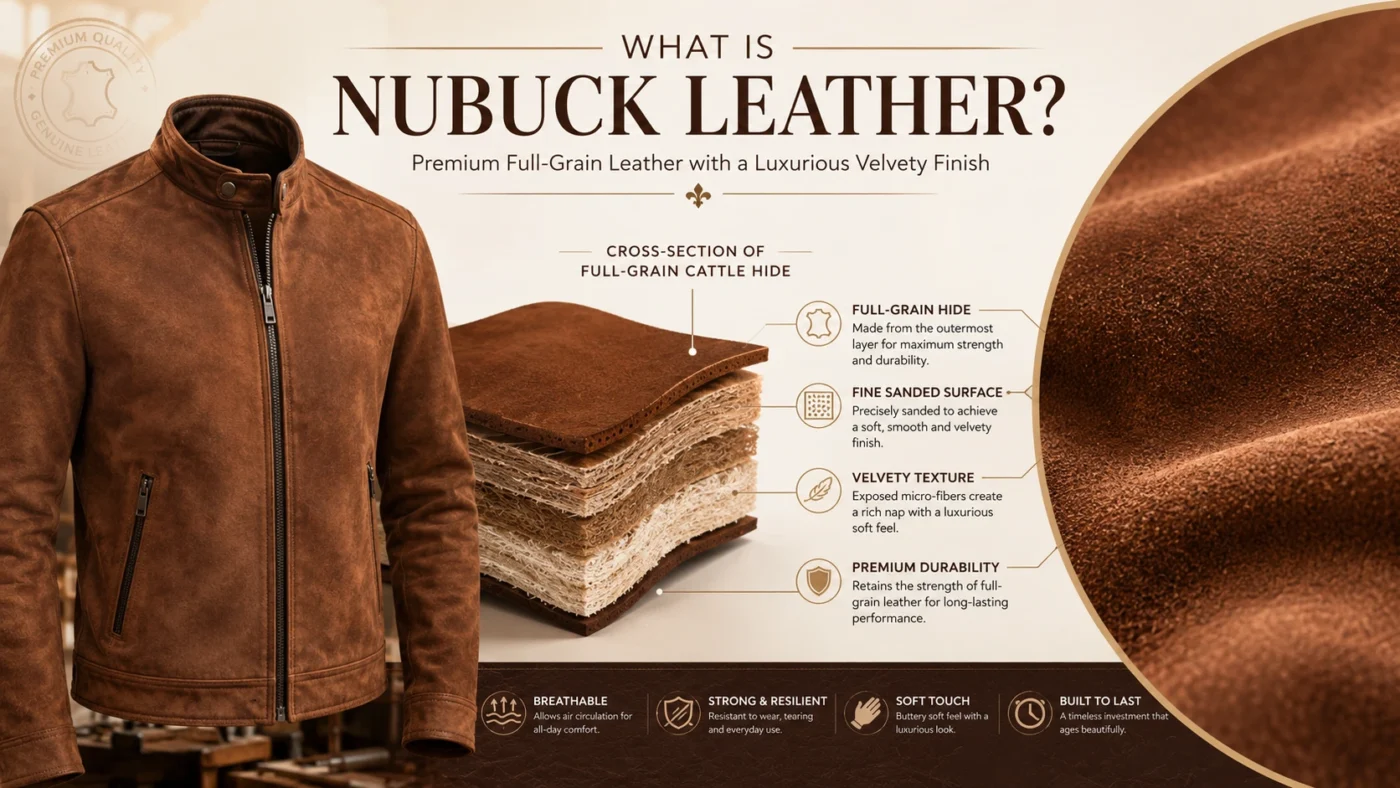
Within the premium fashion and contemporary outerwear landscapes, the categorization of real animal hides extends far beyond standard vertical horizontal split layers. To satisfy the demands of luxury design aesthetics and high-performance durability, specialized mechanical and chemical surface finishing operations are applied to tanned skins. Among these premium finishes, Nubuck leather holds a highly prominent position, celebrated for its unique velvety texture, depth of visual character, and structural density.
For connoisseurs reviewing luxury garment collections on curated digital storefronts such as America Jackets, distinguishing between advanced material variants like Nubuck, Nappa, Saffiano, pebbled, and patent leather is critical. This comprehensive analysis evaluates the material physics, industrial processing, long-term durability metrics, and preservation protocols that govern specialized surface-treated leathers.
Technical Definition: What Is Nubuck Leather Made Of?
Nubuck leather is an organic, high-tier material derived almost exclusively from the outermost layer—the premium full-grain stratum—of cattle or calf skins. Unlike lower-grade vertical horizontal splits, Nubuck retains the densest fiber architecture within the animal hide, guaranteeing exceptional structural resilience.
The Mechanical Sanding Process
The defining velvet-like nap that characterizes Nubuck leather is created through precise mechanical friction:
- The Operation: The outer grain side of the tanned hide is subjected to systematic sanding or buffing utilizing specialized high-velocity industrial abrasive wheels populated with ultra-fine grit sanding compounds.
- The Structural Transformation: This abrasive processing lightly shears the topmost layer of the biological papillary grain. As a result, millions of microscopic protein fiber ends are exposed, establishing a short, highly uniform, velvety nap that feels incredibly soft to the touch.
Nubuck vs. Suede: Clarifying the Structural Contrast
A common misconception within retail commerce is the conflation of Nubuck with suede. While both textiles exhibit a brushed, fuzzy texture, their underlying material anatomy is completely different:
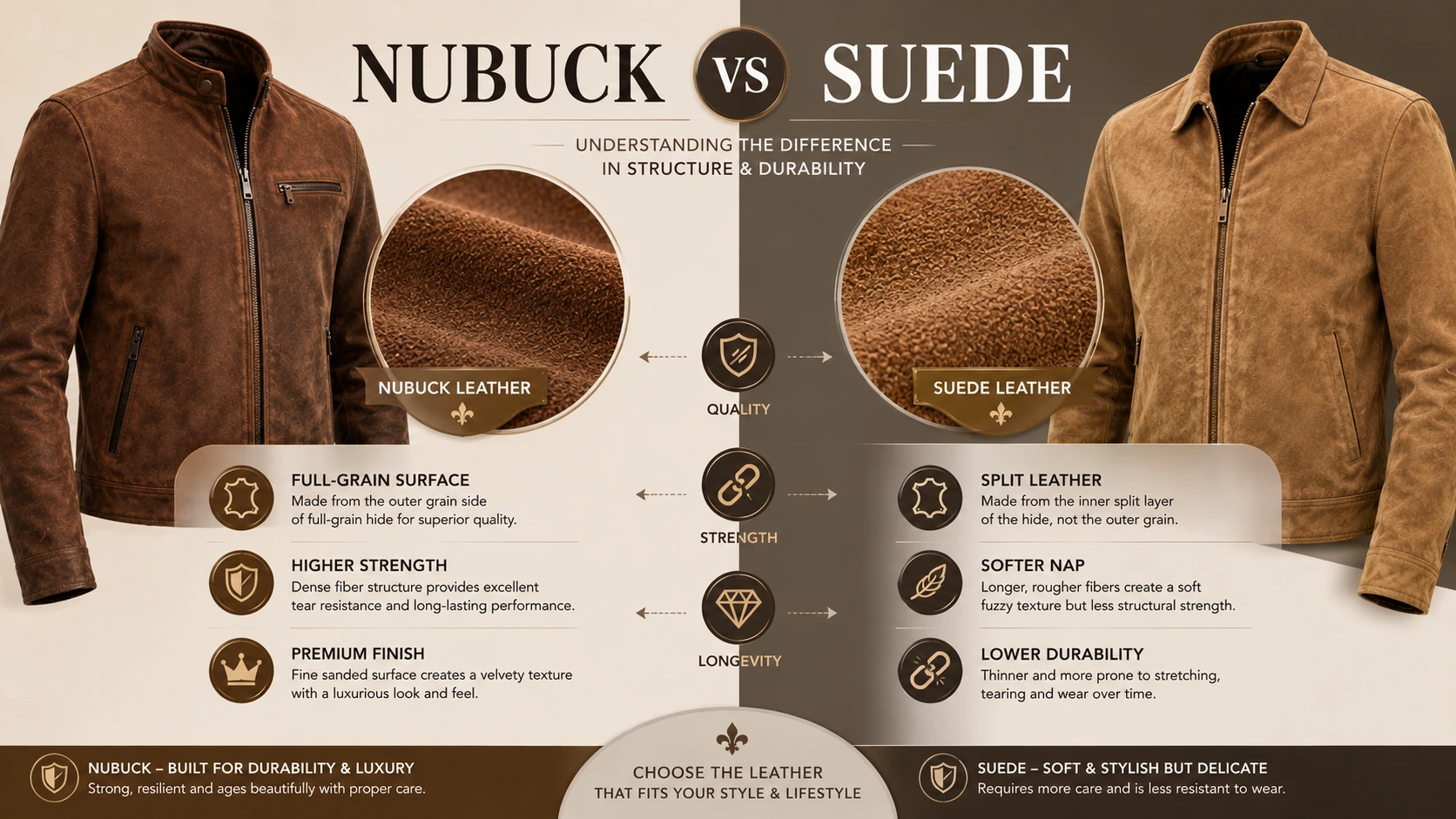
- Nubuck Structure: Nubuck is processed from the outer grain side of the full-grain hide. Because the outer layer contains the absolute highest density of interwoven collagen strands, Nubuck remains thick, structurally rigid, and highly resistant to tearing.
- Suede Structure: Suede is manufactured from the lower flesh-side horizontal split (the reticular layer) or a separate low-grade split sheet. Suede features a much longer, rougher nap and possesses significantly lower tensile strength, making it thinner and highly vulnerable to stretching out of form.
The Landscape of Specialized Finishes: Nappa, Saffiano, Pebbled, and Patent
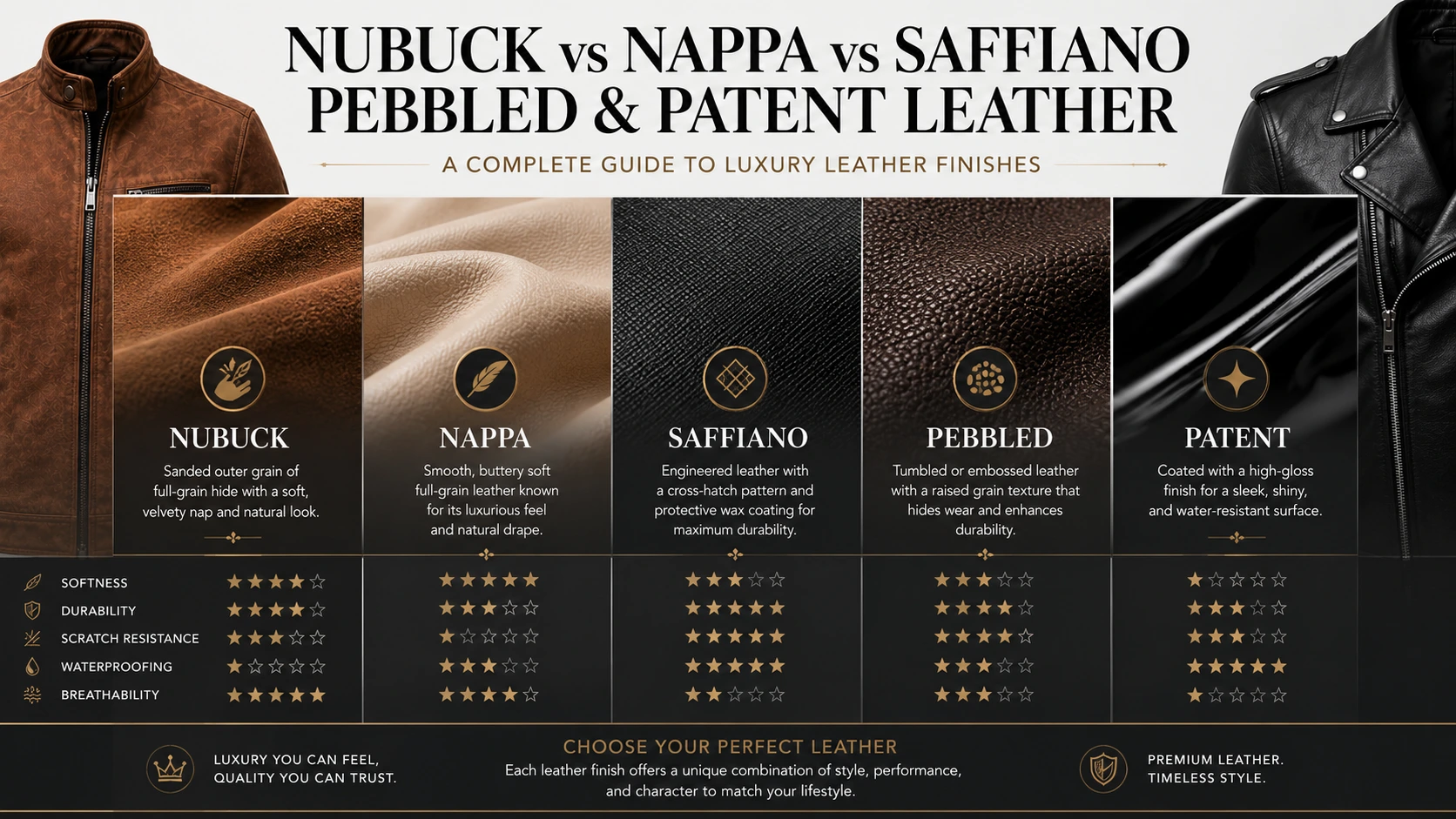
To build an explicit topical understanding of luxury outerwear design, Nubuck must be cross-analyzed against alternative premium surface finishing technologies.
1. Nappa Leather (Napa Leather)
Nappa leather represents the absolute antithesis of Nubuck regarding surface texturing. Rather than being buffed to create a nap, Nappa is left completely smooth.
- Processing: It is derived from premium full-grain sheep, lamb, or calf pelts and undergoes specialized chromium tanning coupled with extensive drum-dyeing using water-soluble aniline pigments.
- Attributes: Nappa leather is defined by its smooth, buttery feel, high breathability, and natural drape, making it the preferred choice for premium celebrity-inspired lightweight jackets.
2. Saffiano Leather
Saffiano leather is an engineered luxury material focused heavily on environmental defense and structural rigidity.
- Processing: A specialized, high-density protective coating of industrial wax (typically polyurethane) is applied to a top-grain cattle hide. The material is then guided into a heavy stamping machine where heated steel rollers press a cross-hatch diagonal pattern directly into the wax layer.
- Attributes: Saffiano is entirely waterproof, exceptionally scratch-resistant, and holds rigid geometric profiles effortlessly.
3. Pebbled Leather
Pebbled leather features a distinctive raised surface texture that replicates a hyper-pronounced biological grain matrix.
- Processing: This texture is achieved through two distinct methodologies: natural tumbling, where the hides are spun inside large dry rotating drums for extended hours to naturally shrink and bunch the grain, or mechanical embossing, where the pebble layout is printed onto the surface under immense hydraulic pressure.
- Attributes: The raised pebble structure provides excellent protection against micro-scratches and scuffs, hiding wear patterns over decades of active utilization.
4. Patent Leather
Patent leather is defined by its glass-like, highly reflective mirror sheen finish.
- Processing: This aesthetic effect is executed by applying multiple thick, liquid coats of polyurethane, acrylic, or vinyl lacquer polymers over a top-grain or split leather foundation sheet.
- Attributes: It is highly rigid and completely hydrophobic, although it lacks natural breathability and is highly prone to micro-creasing along active flex zones over extended deployment.
Comparative Material Performance Matrix
To establish clear guidance for apparel acquisition, the physical properties and performance metrics of these specialized treatments are evaluated head-to-head below:
| Material Type | Structural Base Layer | Surface Texturing Method | Liquid Impermeability | Scratch Vulnerability | Patina Potential |
| Nubuck Leather | Full-Grain Cattle Hide | Fine mechanical sanding (Grain side) | Low (Highly absorbent) | Moderate (Sanding marks can track) | High (Darkens over time) |
| Nappa Leather | Full-Grain Lamb/Calfskin | Unmodified smooth finish | Moderate (Porous) | High (Prone to scuffs) | Maximum (Matures gracefully) |
| Saffiano Leather | Top-Grain Cattle Hide | Thermal-stamped wax cross-hatch | Maximum (100% Waterproof) | Ultra-low (Scratch armor) | Zero (Static visual state) |
| Pebbled Leather | Full or Top-Grain Hide | Mechanical drum tumbling/stamping | Moderate to High | Low (Blemishes are concealed) | Moderate |
| Patent Leather | Top-Grain or Split Hide | Thick polyurethane liquid lacquer coating | Maximum (100% Waterproof) | High (Prone to smudging/cracking) | Zero |
Mechanical Performance, Durability, and Wear Dynamics of Nubuck
Evaluating Nubuck leather for premium garments requires an objective analysis of its structural strengths and material vulnerabilities under conditions of real-world use.
1. High Tensile Longevity
Because the underlying biological matrix of full-grain cattle hide remains unaltered beneath the sanded nap, Nubuck leather possesses incredible durability metrics. It does not flake, peel, or disintegrate over time like synthetic materials or bonded scraps. The high fiber density prevents the material from punctures and seam tearing, ensuring the garment remains structurally sound for decades.
2. High Vapor Transmission and Thermal Equilibrium
The fine mechanical buffing process leaves the microscopic biological pore structures completely unsealed. Consequently, Nubuck leather features an exceptional breathability rating. Ambient heat and sweat moisture find open pathways to escape from the interior lining, establishing a highly ventilated, thermoregulated wearing experience across variable climates.
3. Liquid Sensitivity: The Tracking Effect
Because the protective outermost grain cuticle is sheared away during the sanding process, the exposed protein fibers are highly hydrophilic (water-absorbent). Liquid droplets applied to raw Nubuck are absorbed rapidly, resulting in temporary dark moisture spots. Additionally, brushing a hand across the nap alters the directional alignment of the micro-fibers, creating a distinct visual track or color-shifting shadow effect that is highly characteristic of premium Nubuck.
Strategic Preservation and Maintenance Protocols
Because Nubuck leather features an exposed, highly absorbent micro-nap, its cleaning and preservation systems are highly specialized and differ fundamentally from those used for smooth finished hides.
The Avoidance of Traditional Creams and Waxes
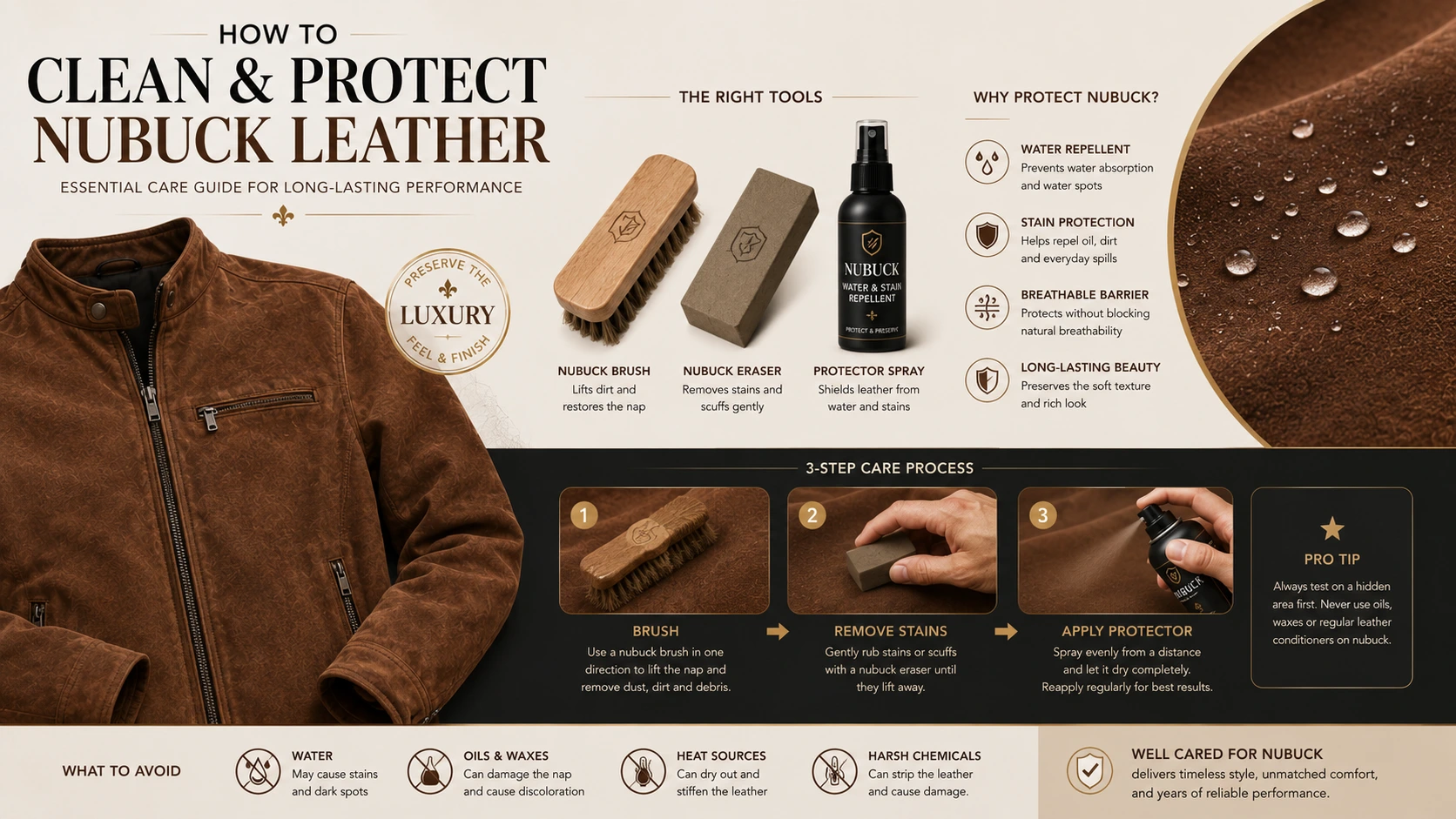
Traditional leather conditioners, animal fats (such as mink oil), paste waxes, and oil-based saddle soaps must never be applied to Nubuck leather. Because there is an open nap, these heavy, viscous compounds will permanently mat the microscopic protein fibers together, transforming the soft, velvety texture into a hard, flattened, greasy surface. Furthermore, oils will deeply saturate the penetrative aniline dyes, resulting in permanent, irreversible dark staining across the garment.
Approved Cleaning and Restoration Sequence
To maintain the visual consistency and texture of Nubuck outerwear, a precise non-liquid protocol must be implemented:
- Particulate Extraction: A specialized Nubuck suede brush containing soft brass wire or stiff nylon bristles must be utilized systematically. The garment is brushed gently using single-directional strokes to lift the nap and extract embedded urban dust, dried mud, and environmental particulate matter trapped within the micro-fibers.
- Stain Eradication: For localized oil smudges or dark rings caused by skin contact along cuffs and necklines, a specialized Nubuck eraser block must be rubbed firmly over the affected zone. The block crumbles systematically, lifting the contaminants out of the micro-fibers mechanically without moisture.
- Hydrophobic Shielding: Following mechanical cleaning, a specialized, fluoropolymer-based spray-on Nubuck water-and-stain repellant protector must be applied evenly across the exterior face. This aerosol cures to establish an invisible, micro-thin hydrophobic barrier around each individual fiber end, preventing liquid droplets from penetrating the surface while fully maintaining the structural breathability of the hide.
Conclusion
Nubuck leather stands among the most refined and visually distinctive materials used in premium outerwear and luxury fashion. Created from the grain side of full-grain hides and enhanced through a specialized sanding process, Nubuck offers a soft velvety texture while maintaining the durability and strength associated with high-quality leather. Although it requires more careful maintenance than coated finishes such as Saffiano or Patent leather, its exceptional breathability, rich appearance, and ability to develop unique character over time make it a favorite among leather enthusiasts. Understanding how Nubuck compares to Nappa, Pebbled, and other specialized leathers allows consumers to make informed purchasing decisions and choose the material that best aligns with their style, performance, and maintenance expectations. With proper care and protection, a Nubuck leather jacket can remain a timeless wardrobe investment for many years.
Frequently Asked Questions
Nubuck leather is a premium leather made from the outer grain side of full-grain cattle or calf hide. The surface is lightly sanded to create a soft, velvety texture while preserving the strength of the full-grain leather beneath.
Yes. Nubuck is 100% genuine leather made from high-quality full-grain animal hides. It is considered one of the most premium leather finishes available.
Nubuck is created from the outer grain side of the hide, while suede is made from the inner split layer. As a result, Nubuck is stronger, thicker, and more durable than suede.
Yes. Because it retains the dense fiber structure of full-grain leather, Nubuck offers excellent durability, tear resistance, and long-term performance when properly maintained.
Nubuck is naturally absorbent and can develop dark spots when exposed to moisture. Applying a Nubuck-specific water-repellent protector helps reduce water absorption and staining.
Nubuck should be cleaned using a specialized Nubuck brush and a Nubuck eraser for stains. Traditional leather creams, oils, and waxes should be avoided because they can damage the nap.
Neither is universally better. Nubuck offers a soft textured finish and casual luxury appeal, while Nappa leather provides a smooth, supple surface with a more polished appearance.
Nubuck can show marks and directional shading due to its brushed surface. However, many minor marks can be minimized by brushing the nap with a Nubuck cleaning brush.
Standard leather conditioners are not recommended for Nubuck. Instead, use products specifically designed for Nubuck and suede to preserve the texture and appearance.Standard leather conditioners are not recommended for Nubuck. Instead, use products specifically designed for Nubuck and suede to preserve the texture and appearance.
Nubuck combines the strength of full-grain leather with a luxurious velvet-like feel, excellent breathability, and a unique visual depth, making it a popular choice for premium leather jackets and outerwear.


Related Posts
Jacket Materials and Colors Guide: Everything You Need to Know
Continue Reading4th of July Outfits, Jackets and Independence Day Style Guide
Continue ReadingWhat Is Faux Leather? Everything You Need to Know Before Buying
Continue Reading