
Guides
What Is PU Leather and Its Common Applications
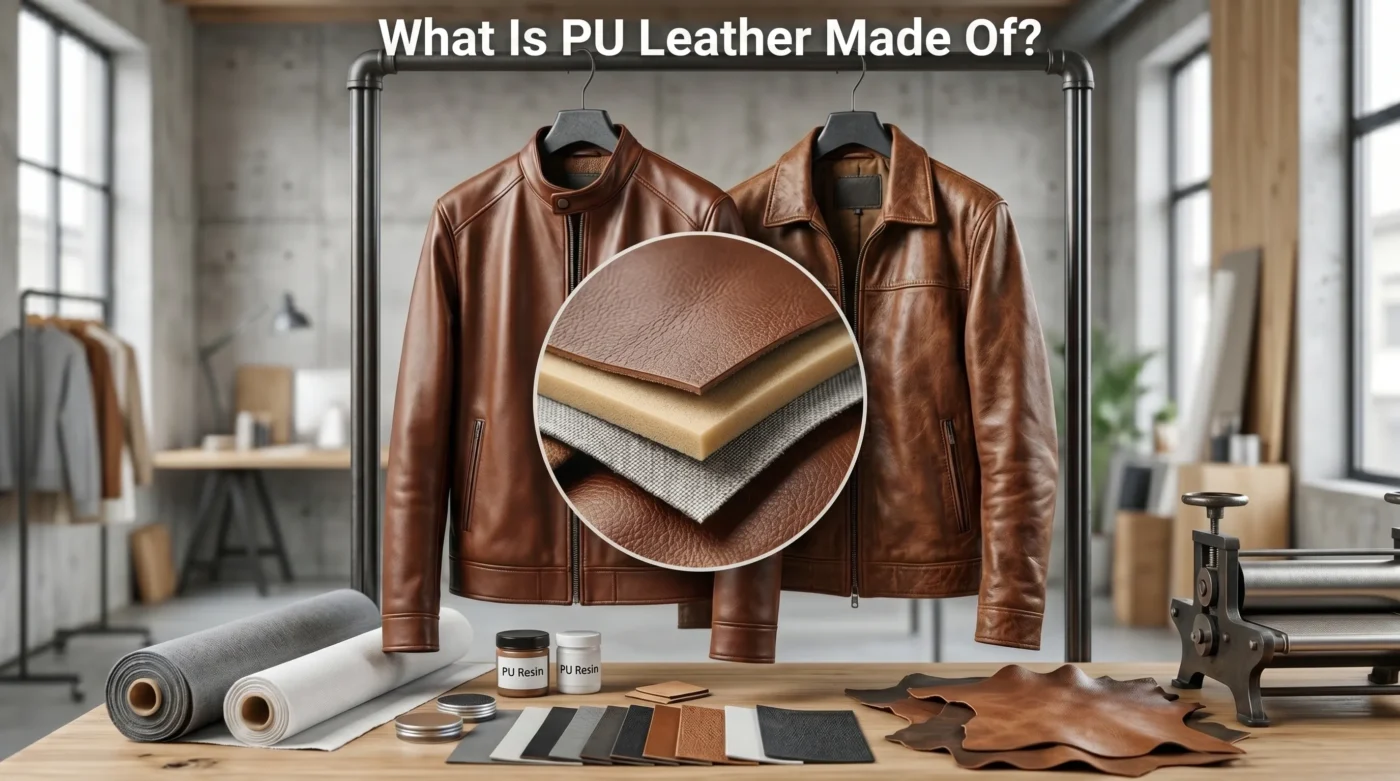
Artificial alternatives have witnessed an unprecedented surge in demand across both the high-fashion outerwear sector and the commercial upholstery industry. Among these synthetic materials, polyurethane leather commonly designated as PU leather occupies a dominant position. While traditional animal hide remains celebrated for its classic resilience, modern technological advancements have allowed engineered polymers to replicate the visual textures of real leather at a fraction of the cost.
For e-commerce consumers navigating premium outerwear platforms like America Jackets, understanding the structural composition, manufacturing methodology, and performance limits of PU leather is essential. This comprehensive analysis provides an objective evaluation of the science behind polyurethane textiles, its physical attributes, and how it performs when utilized in casual apparel and lifestyle accessories.
The Molecular and Structural Composition of PU Leather
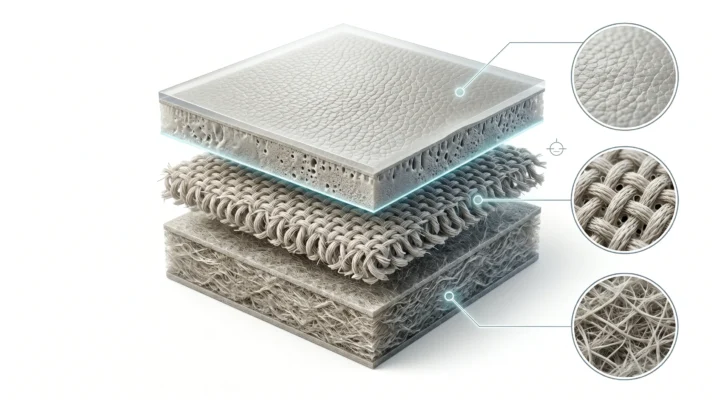
PU leather is not an organic skin; rather, it is a multi-layered composite material engineered through precise textile chemistry. Unlike genuine animal hide, which relies on a biological matrix of interwoven collagen fibers, polyurethane leather is constructed by bonding a synthetic polymer coating to a fibrous structural base layer.
1. The Substrate Base Layer
The foundation of any PU leather sheet is its backing fabric, which dictates the overall tear strength, elasticity, and draping characteristics of the material. Three primary materials are utilized for this substrate:
- Polyester Mesh: The most common synthetic backing, offering immense structural resilience and resistance to stretching.
- Woven Cotton: Utilized in higher-grade synthetic leather to introduce a degree of natural breathability and a softer interior feel.
- Split Leather (Bicast Production): In specific heavy-duty variants known as bicast or split PU leather, a low-grade fibrous layer of real animal skin is utilized as the backing substrate instead of fabric.
2. The Polyurethane Layer
The functional layer that faces the exterior is composed of liquefied polyurethane (PU) resin. Polyurethane is a versatile polymer formed through the chemical reaction of isocyanates with polyols. This liquid resin is applied systematically over the substrate backing, where it cures to form a highly durable, flexible, and completely waterproof synthetic skin.
The Industrial Manufacturing Process: How PU Leather Is Fabricated
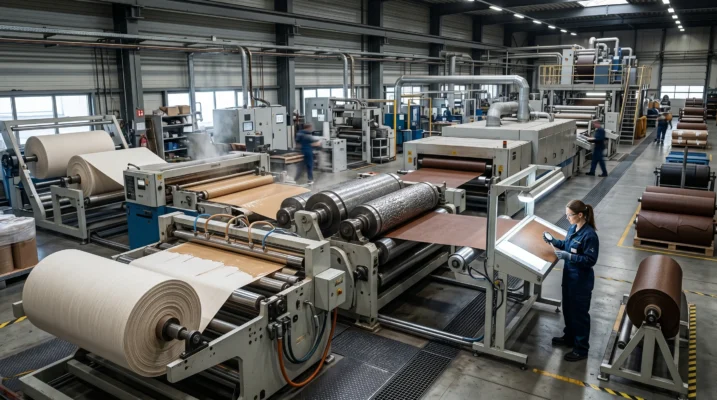
The transformation of raw chemical resins and backing textiles into a finished sheet of grain-embossed PU leather requires a highly regulated, sequence-driven industrial manufacturing pipeline.
Step 1: Formulation of the Polymer Blend
Liquid polyurethane resin is mixed inside industrial vats with specific chemical additives. These include color pigments to achieve precise shades, UV stabilizers to prevent premature discoloration from exposure to sunlight, and plasticizers to ensure the finished material remains pliable and resistant to cold-weather cracking.
Step 2: Substrate Coating (The Direct vs. Transfer Method)
The application of the resin onto the backing fabric is generally executed through one of two methodologies:
- The Direct Coating System: The liquid polyurethane blend is spread directly onto the moving textile backing using specialized mechanical doctor blades, followed immediately by thermal curing inside automated ovens.
- The Transfer Coating System (Release Paper Method): The liquid PU layer is first applied to a specialized release paper sheet that already carries an embossed reverse pattern of a leather grain. Once the polymer layer partially cures, the fabric backing is pressed against it with a chemical adhesive. After final thermal bonding, the release paper is stripped away, leaving a perfectly textured synthetic surface.
Step 3: Mechanical Grain Embossing
If the direct coating system was utilized, the flat synthetic sheet is channeled through heavy, heated steel rollers. These rollers are micro-etched with intricate structural patterns that replicate the natural pore layouts of premium animal skins, such as lambskin or cowhide.
Step 4: Surface Finishing and Texturing
A micro-thin topcoat lacquer is sprayed over the cured material to regulate the gloss level ranging from matte casual finishes to high-reflectivity sheen profiles. This layer also provides essential scratch resistance and seals the material against external environmental elements.
Semi-Synthetic vs. 100% Synthetic: Understanding the Classifications
Not all PU leathers are created equal. The industry categorizes these synthetic materials based on the purity of their composition and the presence or absence of real animal fibers within the backing matrix.
1. 100% Synthetic Polyurethane Leather
This classification is entirely free of animal products. The backing substrate is constructed purely from polyester, nylon, or cotton textiles. This variation represents a completely vegan option and is heavily favored by modern apparel brands specializing in cruelty-free outerwear. It is lightweight, uniform in thickness, and entirely consistent across its surface area.
2. Bicast / Split PU Leather (Semi-Synthetic)
Bicast leather occupies a transitional space between genuine hide and synthetic polymers. When a raw hide is mechanically split into horizontal layers during the tanning process, the bottom-most fibrous layer (the reticular flesh split) is left behind. This structural split lacks any natural grain or visual appeal.
To monetize this byproduct, industrial manufacturers apply a thick, extruded layer of liquid polyurethane resin over the organic split-leather backing. The resulting material possesses the thickness and weight of real animal leather, but its exterior surface and wear characteristics are entirely dictated by the synthetic PU coating.
Physical Properties and Performance Analysis
To appreciate why polyurethane leather is so widely deployed in modern garment manufacturing, its material physics and functional performance profiles must be rigorously analyzed against real-world metrics.
1. Complete Liquid Impermeability
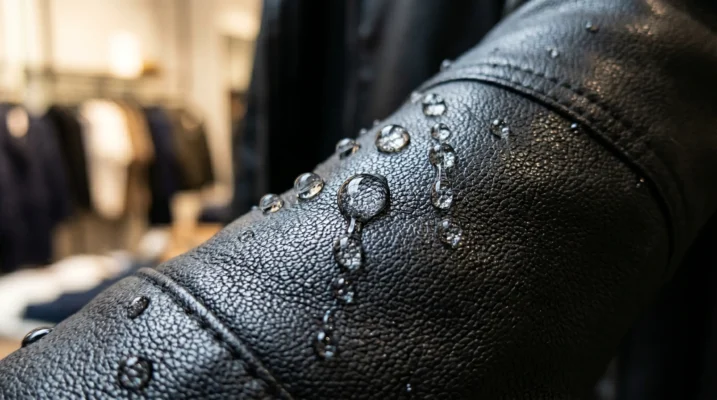
Because the surface layer of PU leather is comprised of a continuous solid polymer matrix, it features no open biological pores. Consequently, the material is highly hydrophobic. Water drops applied to the surface cannot penetrate the synthetic shield; they bead up and roll off completely. This makes PU outerwear highly effective at resisting short-term exposure to light rain showers.
2. Thermal Dynamics and Breathability Constraints
The absolute lack of open biological pores creates a significant barrier to vapor transmission. Unlike full-grain animal hides, which naturally allow body heat and microscopic sweat moisture to escape, PU leather traps air completely. In warmer climates or during periods of physical exertion, garments composed of PU leather can cause an accumulation of body heat, leading to a warmer, less ventilated wearing experience.
3. Elasticity and Tensile Memory
Polyurethane polymers possess remarkable structural memory and elasticity. When stretched or subjected to mechanical joint movement such as bending the elbows while wearing a casual jacket the material yields smoothly without tearing. However, over extended periods of repetitive stress, synthetic fibers lack the self-healing structural integrity of organic collagen strands, which can eventually lead to permanent creasing along stress lines.
PU Leather vs. Real Leather: The Comparative Matrix
For an unambiguous perspective on how polyurethane leather holds up against natural animal hide, an analysis of their core operational metrics is presented in the structured matrix below:
| Performance Metric | Polyurethane (PU) Leather | Genuine / Full-Grain Real Leather |
| Primary Base Material | Petrochemical Resin & Textile Fabric | Organic Animal Hide (Cattle/Sheep) |
| Average Product Lifespan | 2 to 5 Years (Subject to flaking) | 10 to 50+ Years (Increases with age) |
| Moisture Absorption | Zero (Highly Hydrophobic) | Moderate (Porous & Absorbent) |
| Aging Character | Degrades, cracks, and peels away | Matures, softens, and develops patina |
| Aroma Profile | Neutral or faint plastic/chemical odor | Rich, organic, woody, and traditional |
| Maintenance Protocol | Wipe with damp cloth; no oils needed | Periodic conditioning and specialized waxes |
| Material Accessibility | High affordability; mass manufacture | Premium pricing; luxury resource |
Common Applications in the Outerwear and Fashion Industry
The economic efficiency, physical uniformity, and aesthetic flexibility of PU leather have made it a cornerstone material for diverse commercial applications.
PU Leather Utilization Channels
- Outerwear (Lightweight fashion jackets, celebrity replicas)
- Accessories (Wallets, structured belts, budget backpacks)
- Footwear (Water-resistant boots, athletic sneakers)
- Lifestyle Goods (Device cases, tech organizer sleeves)
1. Fashion Outerwear and Performance Replicas
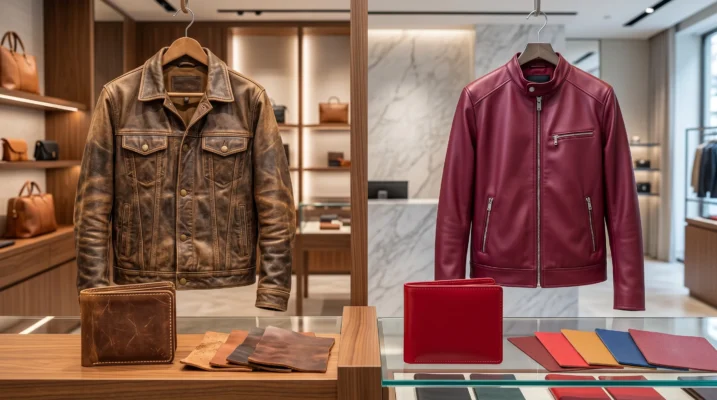
In the fashion ecosystem, PU leather is highly prized for creating lightweight, highly styled jackets. Because the material can be dyed into highly precise tones with absolute consistency, it is frequently utilized for complex colorway jackets, pop-culture fashion replicas, and contemporary streetwear lines where absolute visual perfection is prioritized over multi-decade structural durability.
2. Lifestyle Accessories and Everyday Footwear
The high water resistance of polyurethane makes it an exceptional candidate for consumer footwear, protecting feet from exterior slush and mud. Additionally, items that require rigid geometric structuring such as minimalist wallets, electronic device cases, and casual everyday travel bags—benefit heavily from the uniform thickness and crisp cutting characteristics of premium PU sheets.
Maintenance, Longevity, and Environmental Lifecycle
Preserving the aesthetic presentation of polyurethane garments requires a completely different approach than that used for biological materials. Because it is non-porous, traditional animal leather conditioners, animal fats, and saddle soaps are completely ineffective; they cannot penetrate the polymer coating and will merely leave a sticky, dust-attracting residue on the surface.
Cleanliness Protocols
To remove surface dirt or salt crusting from urban rain, a simple wipe down with a soft microfiber cloth slightly moistened with tepid water and a drop of pH-neutral liquid soap is all that is required. The surface must then be dried completely with a clean towel to prevent water spot formation.
Understanding the Degradation Process: Hydrolysis
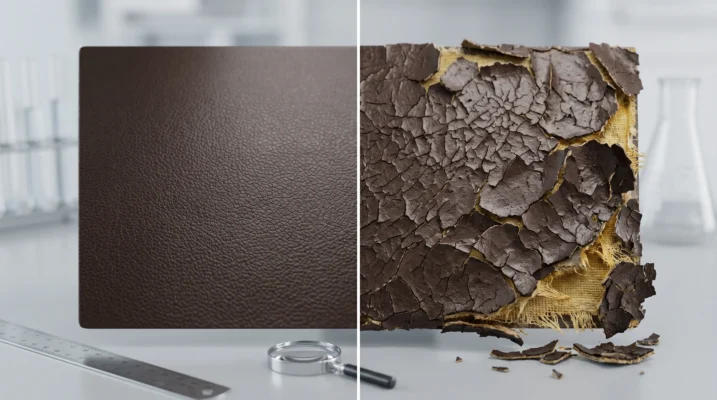
The primary failure point of polyurethane leather is a chemical process known as hydrolysis. Over years of exposure to environmental moisture, ambient humidity, and body oils, the water molecules gradually break down the chemical bonds within the polyurethane polymer chain. This structural degradation manifests as:
- Surface Stickiness: The topcoat chemical matrix begins to lose its stability.
- Micro-cracking: Fine fractures appear along active bend lines, such as the inner elbows or wrists.
- Flaking and Peeling: The polyurethane coating separates entirely from the underlying fabric substrate, marking the end of the garment’s functional lifespan.
Frequently Asked Questions
PU leather is made by applying a polyurethane coating over a fabric backing such as polyester, cotton, or split leather. This creates a synthetic material that resembles genuine leather while remaining lightweight and affordable.
No. Standard PU leather is a synthetic material and does not contain animal hide. However, bicast PU leather may use a split leather backing covered with a polyurethane coating.
PU leather is manufactured by coating a textile substrate with liquid polyurethane resin, curing it, embossing a leather-like grain texture, and applying a protective finishing layer.
PU leather is highly water-resistant because its polymer surface does not contain natural pores. Water generally beads up on the surface rather than soaking into the material.
The lifespan of PU leather typically ranges from 2 to 5 years, depending on quality, environmental conditions, and maintenance practices.
PU leather is a synthetic material made from polyurethane and fabric, while genuine leather comes from animal hide. Genuine leather generally lasts longer and develops a natural patina over time.
Yes. Over time, PU leather can experience hydrolysis, a chemical breakdown process that may cause cracking, peeling, flaking, and surface deterioration.
Most PU leather products are considered vegan because they are made entirely from synthetic materials. However, bicast leather is not vegan because it contains a split leather backing.
Minor scratches and surface marks can sometimes be improved with repair compounds, but severe peeling or hydrolysis damage is usually permanent and difficult to restore.
PU leather is widely used for fashion jackets because it is lightweight, affordable, water-resistant, and available in many colors and finishes. It is ideal for style-focused outerwear but generally does not last as long as genuine leather.


Related Posts
Jacket Materials and Colors Guide: Everything You Need to Know
Continue Reading4th of July Outfits, Jackets and Independence Day Style Guide
Continue ReadingWhat Is Faux Leather? Everything You Need to Know Before Buying
Continue Reading