
Guides
What Is Bonded Leather? The Real Material Grades Explained
Within the consumer retail landscape, navigating the nomenclature of material classifications can be exceptionally challenging. Terms like bonded, genuine, full-grain, and top-grain are frequently utilized across marketing copy to denote varyingly divergent levels of quality, performance, and longevity. Among these classifications, bonded leather occupies the lowest tier of real hide components. While it is technically marketed under the umbrella of real hide products, its structural compilation and lifecycle limitations separate it fundamentally from solid leather sheets.
For patrons auditing premium outerwear collections on specialized digital storefronts like America Jackets, distinguishing between high-integrity solid hides and reconstituted alternatives is critical. This comprehensive guide provides an objective engineering analysis of what bonded leather is, how it is industrially manufactured, and how its mechanical properties contrast against premium tiers like full-grain and top-grain leather.
Technical Definition: What Is Bonded Leather Made Of?
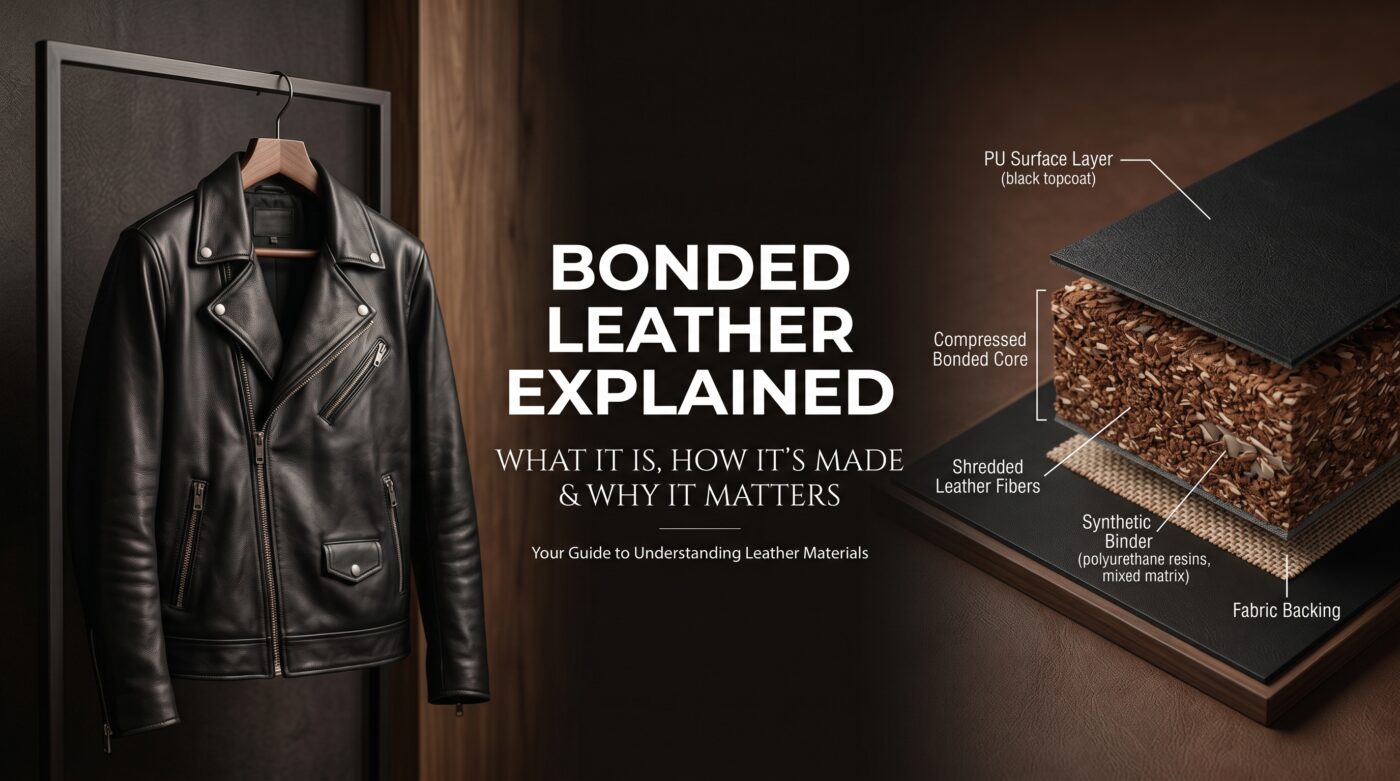
Bonded leather (occasionally designated as reconstituted leather or blended leather) is not an indivisible sheet of animal tissue. Instead, it is an engineered composite material composed of shredded leather scraps combined with synthetic bonding agents.
The anatomical makeup of a bonded leather sheet can be compared directly to particleboard or engineered engineered wood, where leftover wood shavings are compressed into boards. The layout of this material is divided into three primary functional zones:
1. The Shredded Fiber Core
The foundational mass of the material consists of shredded remnants, trimmings, and biological dust harvested from the floors of commercial tanneries. These scraps are pulverized inside high-velocity industrial mills into micro-thin collagen fibers. In standard production matrices, actual biological hide scraps constitute only 10% to 20% of the finished product’s total mass.
2. The Synthetic Polymer Binder
To transform the pulverized fiber mass into a cohesive structural layer, the shreds are blended inside mixing vats with specialized binding agents. These agents are composed of liquid polyurethane, industrial latex, and synthetic plasticizers. This chemical slurry is extruded onto a flat mechanical conveyor system.
3. The Backing and Embossed Surface
The chemical pulp is compressed under heavy, heated rollers over a backing mesh composed of woven polyester or non-woven fabric. Once dry, an exterior layer of polyurethane (PU) resin is applied to the surface. This synthetic skin is then passed through micro-etched steel cylinders to mechanically print an imitation leather grain layout across the plastic topcoat.
Explaining the Hierarchy of Real Leather Grades
To contextualize where bonded leather resides within the structural spectrum, the vertical grading hierarchy of natural animal skins must be systematically defined from the highest tier to the lowest.
1. Full-Grain Leather: The Supreme Stratum
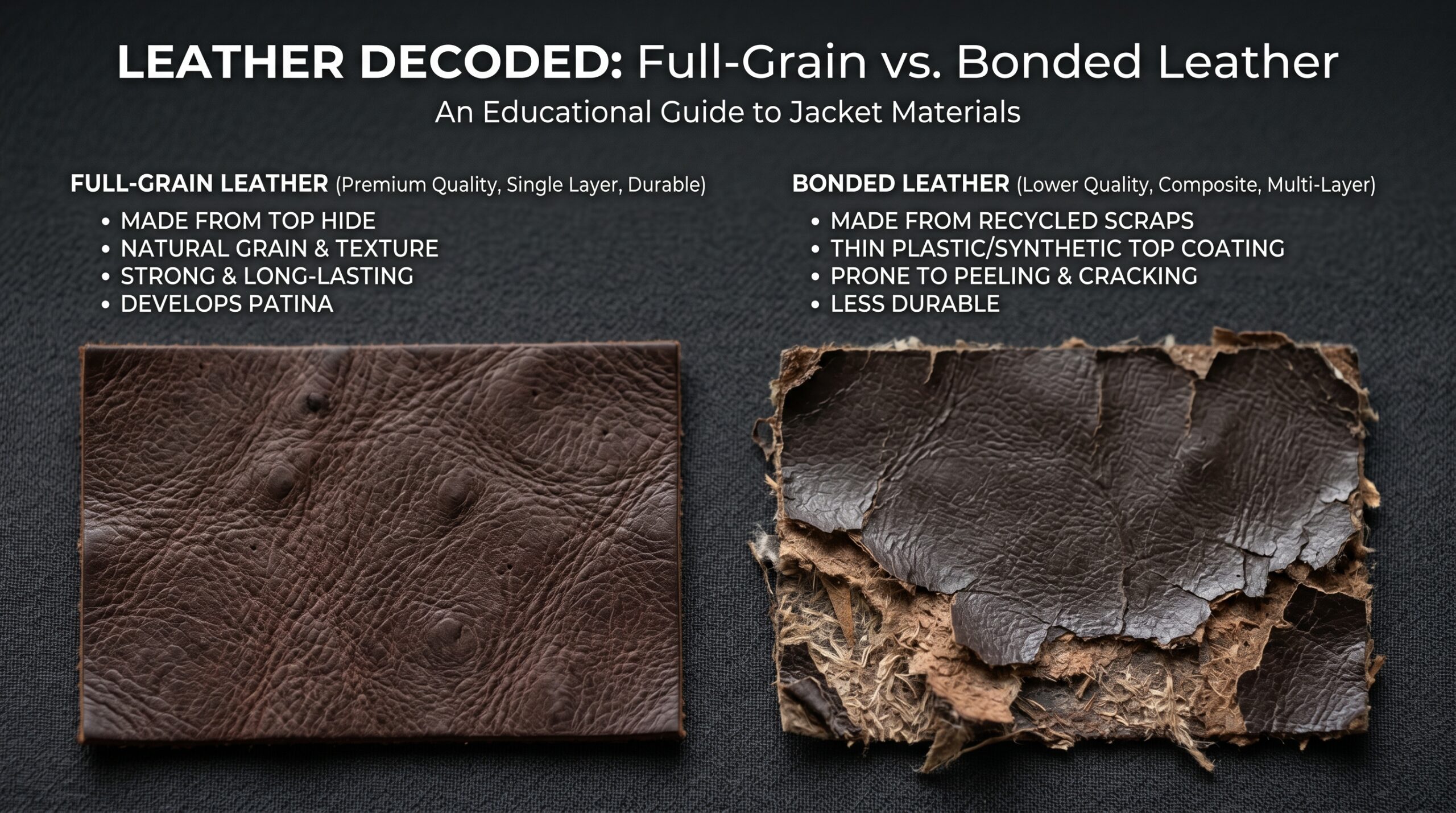
Full-grain leather represents the pinnacle of material integrity. It is derived from the topmost layer of the animal hide directly beneath the hair matrix.
- The Structure: The outer papillary grain layer is left completely intact. No mechanical sanding, buffing, or shaving operations are executed to remove natural structural markings or insect scars.
- Mechanical Properties: Because the densest density of interwoven collagen fibers is retained, full-grain sheets possess unparalleled tensile strength, extreme breathability, and complete resistance to flaking. Over decades of active wear, it develops a classic, highly lustrous patina.
2. Top-Grain Leather: The Premium Finished Grade
Top-grain leather is harvested from the identical upper layer of the hide as full-grain, but it is subjected to an industrial surface alteration.
- The Process: The topmost biological grain surface is lightly buffed or sanded to erase surface imperfections, scars, or superficial wrinkles.
- Mechanical Properties: To compensate for the removal of the strongest outer fibers, a protective synthetic topcoat sealant is applied over the sanded surface, followed by artificial grain embossing. It is slightly thinner and more flexible than full-grain leather, making it highly favored for luxury casual apparel and structured outerwear sleeves.
3. Split Leather: The Intermediate Layer
When a thick raw cattle hide is channeled into a horizontal splitting machine, it is sliced into multiple vertical sections. The premium top portions become full-grain or top-grain, while the lower section facing the flesh side is designated as split leather.
- The Structure: Split leather lacks any natural grain architecture, consisting purely of loose, coarse reticular collagen strands.
- Common Forms: If the split hide is brushed mechanically to produce a velvety nap on both faces, it is designated as Suede. Suede is highly flexible and visually distinct but remains porous and vulnerable to liquid moisture.
4. Genuine Leather: Decoding the Commercial Label
The designation “Genuine Leather” is frequently misinterpreted by consumers as a guarantee of supreme quality. In industrial manufacturing, it represents a lower tier of solid hide material.
- The Structure: Genuine leather is constructed by taking low-grade split leather layers and applying a heavy coating of surface pigments, oils, and synthetic binders to the exterior. An artificial grain texture is then embossed onto the surface. While it contains 100% solid animal fiber, it lacks the longevity of top-grain configurations and is highly susceptible to creasing and stretching over short periods of active use.
How Bonded Leather Is Fabricated: The Manufacturing Sequence
The industrial pipeline required to manufacture reconstituted bonded sheets is fully automated and relies heavily on chemical extrusion technologies:
Tannery Hide Waste ──► Pulverization Milling ──► Latex/PU Binder Mixing ──► Roller Extrusion ──► Grain Stamping
- Scrap Collection: Residual biological matter from traditional chrome and vegetable tanning processes is gathered.
- Mechanical Shredding: The waste is processed inside industrial mills until the fibers match a uniform, particulate state.
- Chemical Blending: The biological particulates are mixed with liquid latex stabilizers and polyurethane polymers at specific ratios to ensure material pliability.
- Sheet Calendaring: The slurry is rolled out flat over a continuous mesh carrier matrix under heavy mechanical presses to dry.
- Surface Lacquering: A final non-porous polymer coat is applied to the exterior face, providing the final color hue and gloss texture.
Performance Disruption: Why Bonded Leather Fails
The mechanical performance metrics of bonded leather are drastically inferior to any tier of solid hide due to its lack of an unbroken collagen network.
1. Absolute Lack of Structural Breathability
Because the particulate core is encased between a fabric backing mesh and a solid polyurethane surface lacquer, bonded leather possesses zero open biological channels. It acts as an absolute vapor barrier, trapping body heat and interior ambient humidity completely, which results in a less comfortable wearing profile during warmer weather cycles.
2. Accelerated Structural Flaking and Peeling
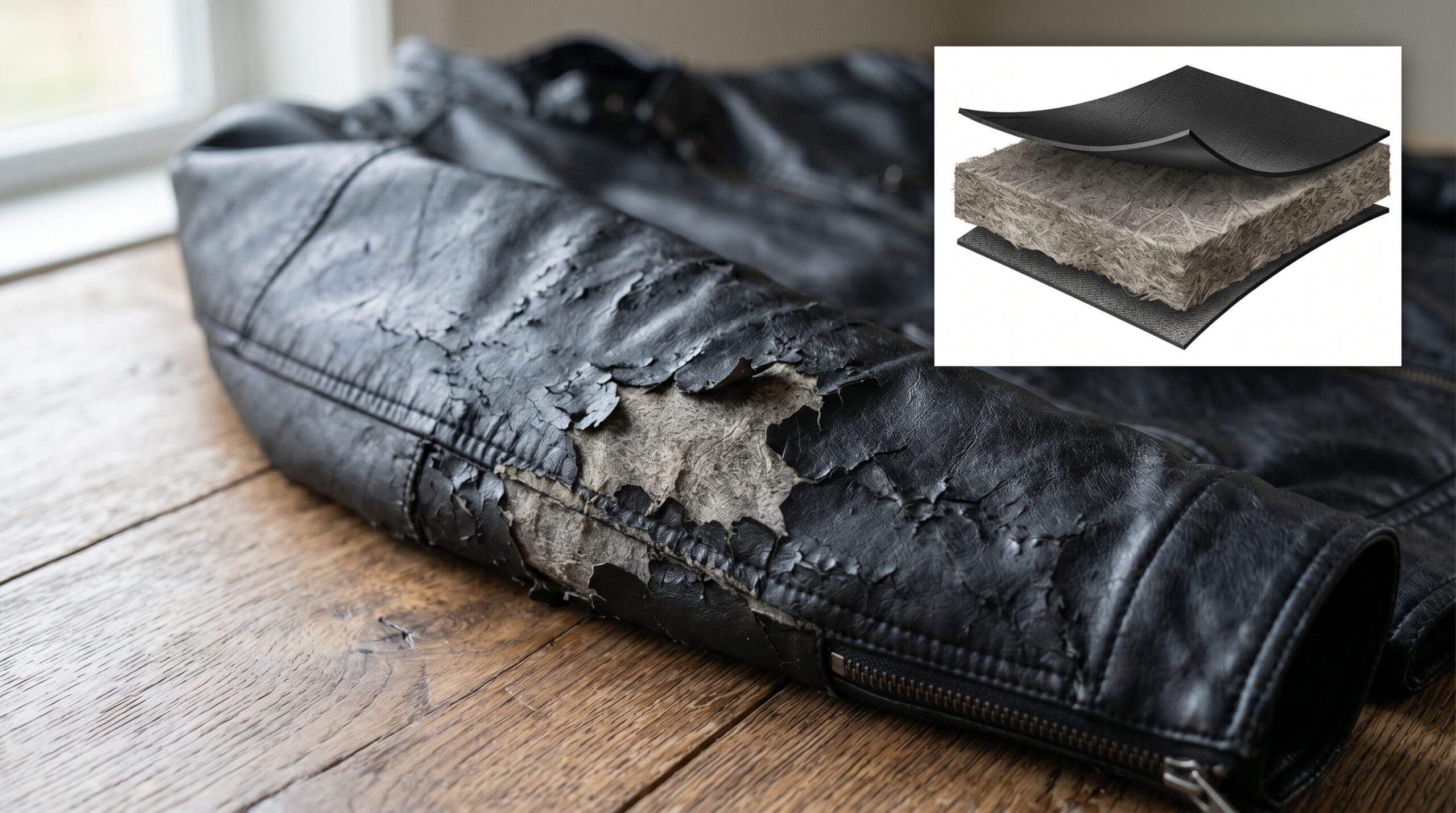
The primary failure mode of bonded leather is localized delamination. Because the structural core relies entirely on synthetic glue and latex binders to hold the biological shreds together, regular mechanical flexing such as the bending motion along garment elbow zones causes rapid micro-fractures inside the adhesive matrix.
Over a brief window of 1 to 3 years, exposure to ambient moisture triggers hydrolysis within the binders, causing the outer polymer skin to fracture and peel away in large, dry flakes. Once delamination begins, the pulverized core disintegrates completely, rendering the item unrepairable.
Technical Grade Evaluation Matrix
To establish a clear comparative baseline for e-commerce acquisition strategy, the fundamental physical and mechanical criteria separating the primary material grades are detailed below:
| Technical Parameter | Full-Grain Leather | Top-Grain Leather | Genuine Leather | Bonded Leather |
| Fiber Continuity | 100% Solid, continuous biological matrix | 100% Solid, sanded upper hide layer | 100% Solid, vertical lower hide split | Reconstituted scraps and pulverized dust |
| Actual Hide Mass | 100% Natural Skin | 100% Natural Skin | 100% Natural Skin | 10% to 20% Hide Fibers |
| Adhesive/Binders | Zero | Zero | Minimal (Surface only) | High (Latex & Polyurethane matrix) |
| Average Lifespan | 20 to 50+ Years | 10 to 20 Years | 3 to 7 Years | 1 to 3 Years (Subject to peeling) |
| Aging Character | Evolves rich patina | Static; slow wear | Creases and stretches | Delaminates and flakes away |
| Breathability Scale | Maximum | Moderate | Low | Zero |
Strategic Preservation and Maintenance Guidelines
Because bonded leather is a composite material held together by synthetic adhesives, traditional natural hide preservation strategies are wholly ineffective and can accelerate material destruction.
The Failure of Traditional Leather Conditioners
Dense natural lipid oils, such as mink oil, neatsfoot oil, and traditional animal fat saddle soaps, must never be applied to bonded leather. Because the surface is sealed with a non-porous polyurethane skin, these oils cannot reach the pulverized core. Instead, they will accumulate within surface creases, chemically dissolving the plastic binders and accelerating the onset of delamination and flaking.
The Approved Maintenance Protocol
To maximize the short operational window of bonded items, cleaning routines must be non-invasive:
-
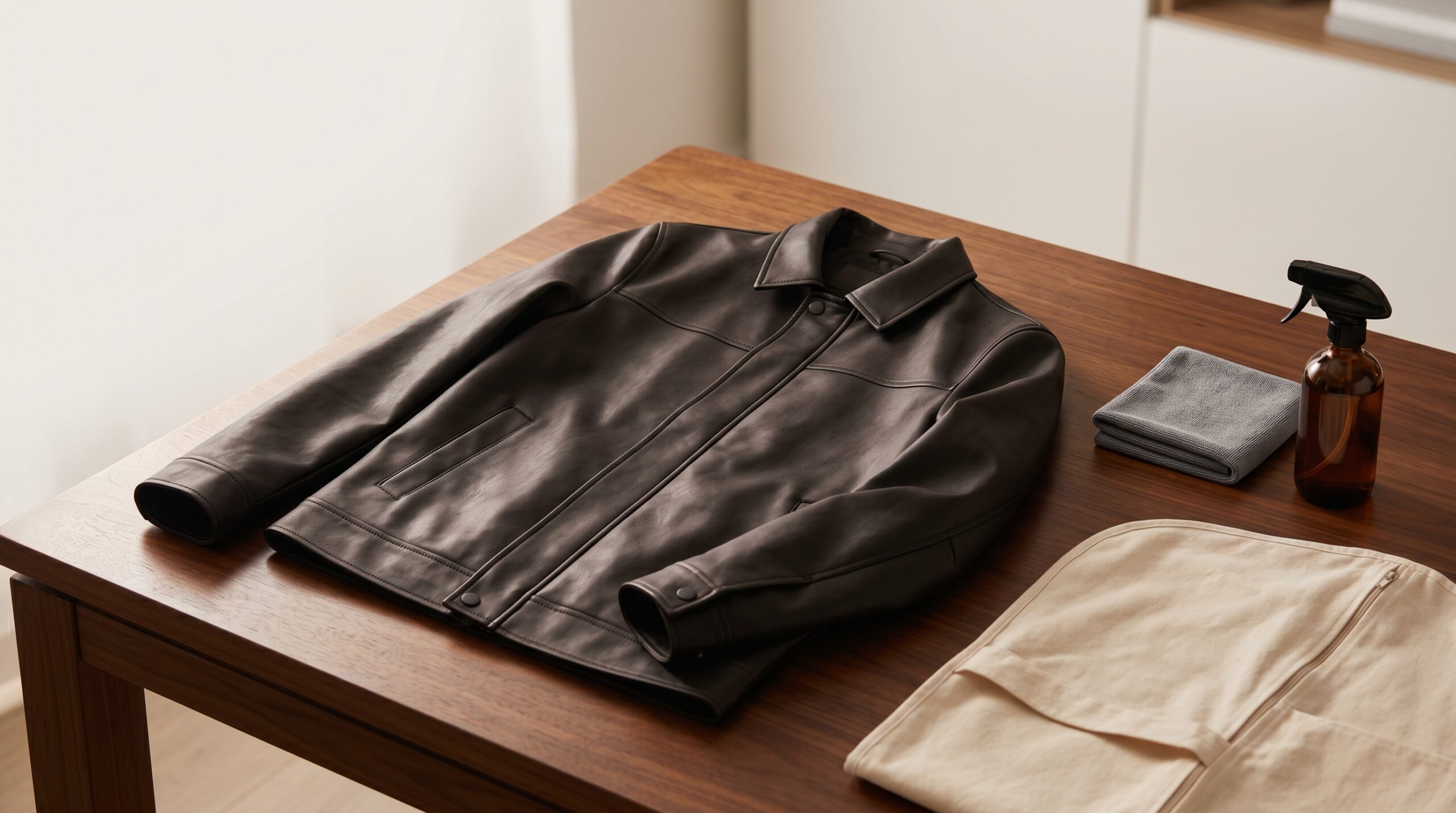
- Dust and light urban smudges should be wiped clean utilizing a dry microfiber cloth.
- If fluid contact occurs, the zone must be blotted using a cloth moistened lightly with plain, room-temperature water.
- No rubbing operations should be executed, as friction can cause the thin polymer top layer to separate from the underlying pulp core.
- The material must be stored completely away from localized heat sources (such as radiators) and shielded from prolonged exposure to direct ultraviolet sunlight to prevent the latex binders from drying out and turning brittle.
While bonded leather serves as an affordable alternative, shoppers seeking greater durability and long-term value often prefer exploring a premium Leather Jackets Collection built from higher-quality materials.
Conclusion
Bonded leather may technically contain real leather fibers, but it is fundamentally different from premium leather grades such as full-grain, top-grain, and even genuine leather. Rather than being crafted from a continuous piece of animal hide, bonded leather is manufactured from shredded leather scraps that are combined with synthetic binders and covered with a polyurethane surface layer. This construction allows manufacturers to create leather-like products at a lower cost, but it also significantly reduces durability, breathability, and long-term performance. As a result, bonded leather is more prone to peeling, flaking, and structural breakdown than any solid-hide leather grade. For consumers seeking lasting quality, understanding the differences between bonded leather and premium leather materials is essential. While bonded leather can be a budget-friendly option for short-term use, those investing in outerwear, furniture, or accessories designed to withstand years of wear will generally benefit from choosing higher-grade leather alternatives that offer superior strength, comfort, aging characteristics, and overall value.
Frequently Asked Questions
Bonded leather is made from shredded leather scraps, leather fibers, polyurethane binders, latex adhesives, and a synthetic surface coating that is embossed to resemble genuine leather.
Bonded leather contains a small percentage of real leather fibers, typically around 10% to 20%, but it is not made from a solid sheet of animal hide like full-grain or top-grain leather.
The average lifespan of bonded leather is usually between 1 and 3 years, depending on usage, environmental conditions, and maintenance practices.
Bonded leather peels because its polyurethane surface and adhesive binders gradually break down through regular flexing, moisture exposure, heat, and aging, causing the top layer to separate from the core material.
No. Genuine leather is made from solid animal hide, while bonded leather is a reconstituted material made from scraps and synthetic binders. Genuine leather generally offers better durability and longevity.
Unfortunately, bonded leather cannot usually be permanently repaired once peeling begins because the structural adhesive matrix has already failed. Most repairs are temporary cosmetic solutions.
No. Bonded leather has very limited to zero breathability because the leather fibers are sealed beneath a non-porous polyurethane coating.
Bonded leather often has a highly uniform grain pattern, a synthetic feel, and may be labeled as bonded leather, blended leather, or reconstituted leather. It is usually less expensive than full-grain or top-grain leather products.
Most traditional leather conditioners, including mink oil and neatsfoot oil, are not recommended for bonded leather because they can damage the synthetic surface and accelerate deterioration.
Bonded leather may be suitable for budget-conscious buyers seeking a leather-like appearance, but it generally lacks the durability, comfort, flexibility, and lifespan offered by full-grain, top-grain, or high-quality genuine leather jackets.


Related Posts
Jacket Materials and Colors Guide: Everything You Need to Know
Continue Reading4th of July Outfits, Jackets and Independence Day Style Guide
Continue ReadingWhat Is Faux Leather? Everything You Need to Know Before Buying
Continue Reading